
Section factor first
Paint thickness depends on the section factor (heated perimeter ÷ area). A slightly heavier, more compact section can need far less intumescent – we compare both and choose the cheaper total.
Passive fire protection for structural steel
Steel loses about half of its strength at around 550 °C. Intumescent paint swells into an insulating char in a fire and keeps the steel below its critical temperature for 30 to 120 minutes – we make sure you get the rating you need with the least paint possible.
Under Thailand's Building Control Act and its Ministerial Regulations, the structural members of high-rise buildings, large buildings and many buildings used by the public must achieve a specified fire-resistance period – commonly one to three hours depending on the building class and the member. Factories, warehouses storing combustible goods and buildings insured under international programmes often require it too.
The required period is set by your architect or Thai licensed engineer and the local authority. We take that requirement and turn it into the most economical coating specification, member by member.
Cost cut at the design stage
Paint thickness depends on the section factor (heated perimeter ÷ area). A slightly heavier, more compact section can need far less intumescent – we compare both and choose the cheaper total.
Thin-film intumescents for R30–R90, high-build or epoxy systems where R120 or hydrocarbon fires apply – from international brands with third-party assessed thickness tables.
Using the real utilisation of each member instead of a default 550 °C often lowers the required thickness further.
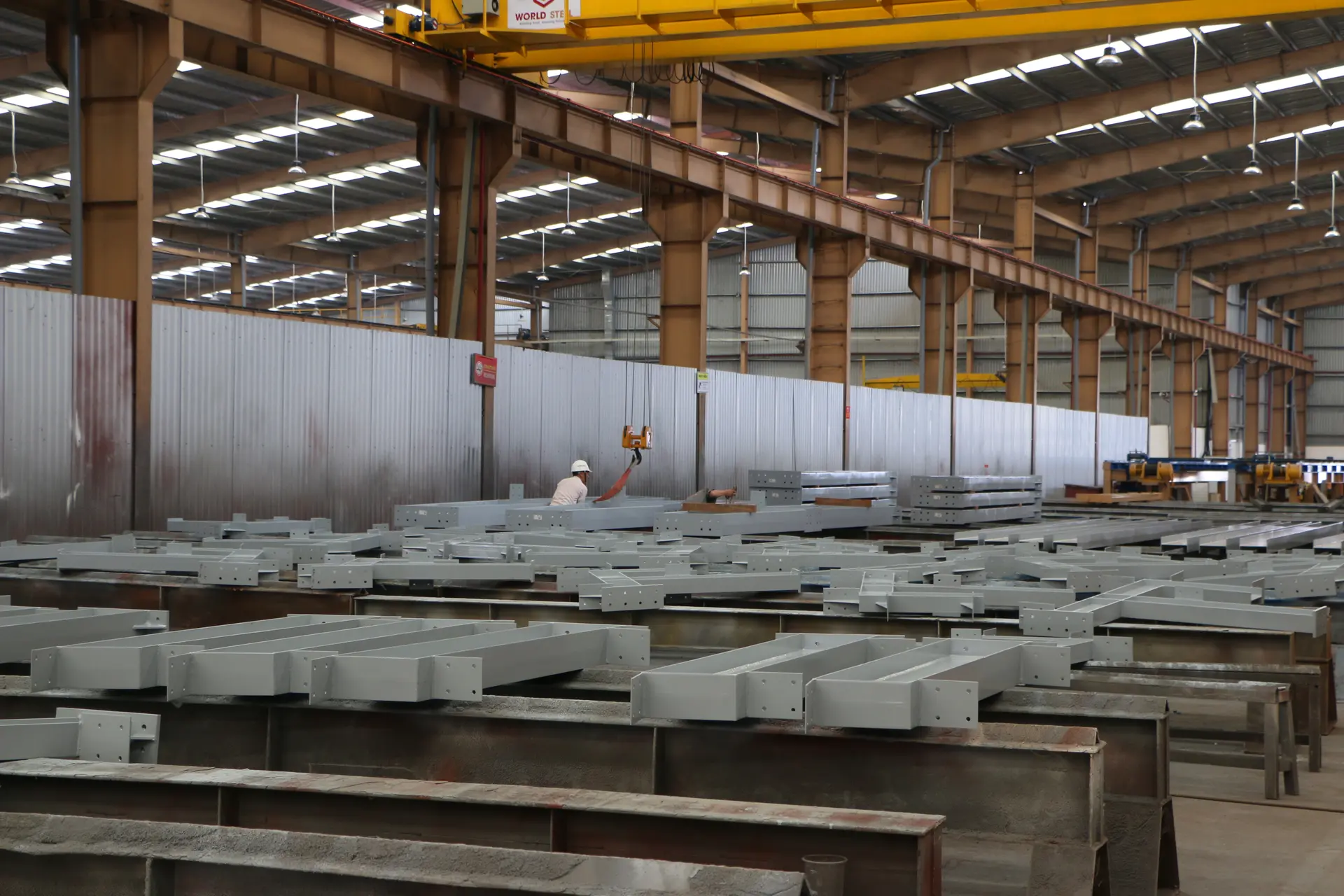
Blast-cleaned to Sa 2½, primed with a compatible primer and sprayed in our factory under controlled humidity – thickness measured and recorded for every member.
Humid, coastal or semi-exposed areas get a sealer or polyurethane topcoat so the intumescent stays effective for the life of the building.
Edge protection, wrapping and a touch-up kit with the shipment – damage from handling is repaired in minutes, not days.
Coating system
Abrasive blast cleaning to Sa 2½ (ISO 8501-1), profile checked before priming.
Epoxy or alkyd primer approved by the intumescent manufacturer, typically 50–80 µm.
Thickness per member from the assessed tables – from a few hundred microns for R30 to several millimetres for R120.
Acrylic or polyurethane topcoat in your chosen RAL colour for durability and appearance.
Ratings
We apply intumescent systems from manufacturers such as Jotun (SteelMaster), International / AkzoNobel (Interchar), Hempel (Hempacore), Sherwin-Williams (Firetex) and Carboline – or the brand named in your specification. Every project receives the product data sheets, assessment certificates and our DFT records.
FAQ
Factory application gives controlled conditions, faster drying and recorded thickness, and keeps painting off your critical path. Site application suits members that must be welded on site or very large members; many projects combine both with site touch-up.
Properly specified and top-coated systems in interior or sheltered conditions are designed for the long-term life of the building; the manufacturer's maintenance guidance is included with our handover documents.
Yes. Many buildings only need rated escape routes, mezzanines or specific frames. Mark the zones on the drawings and we price only those members.
Structural design, fabrication, fire protection and CIF or DDP delivery in one quotation. Answer within 48 hours.