
Bolts line up the first time
CNC-drilled holes checked against approved shop drawings mean no re-drilling or site welding in the industrial estate.
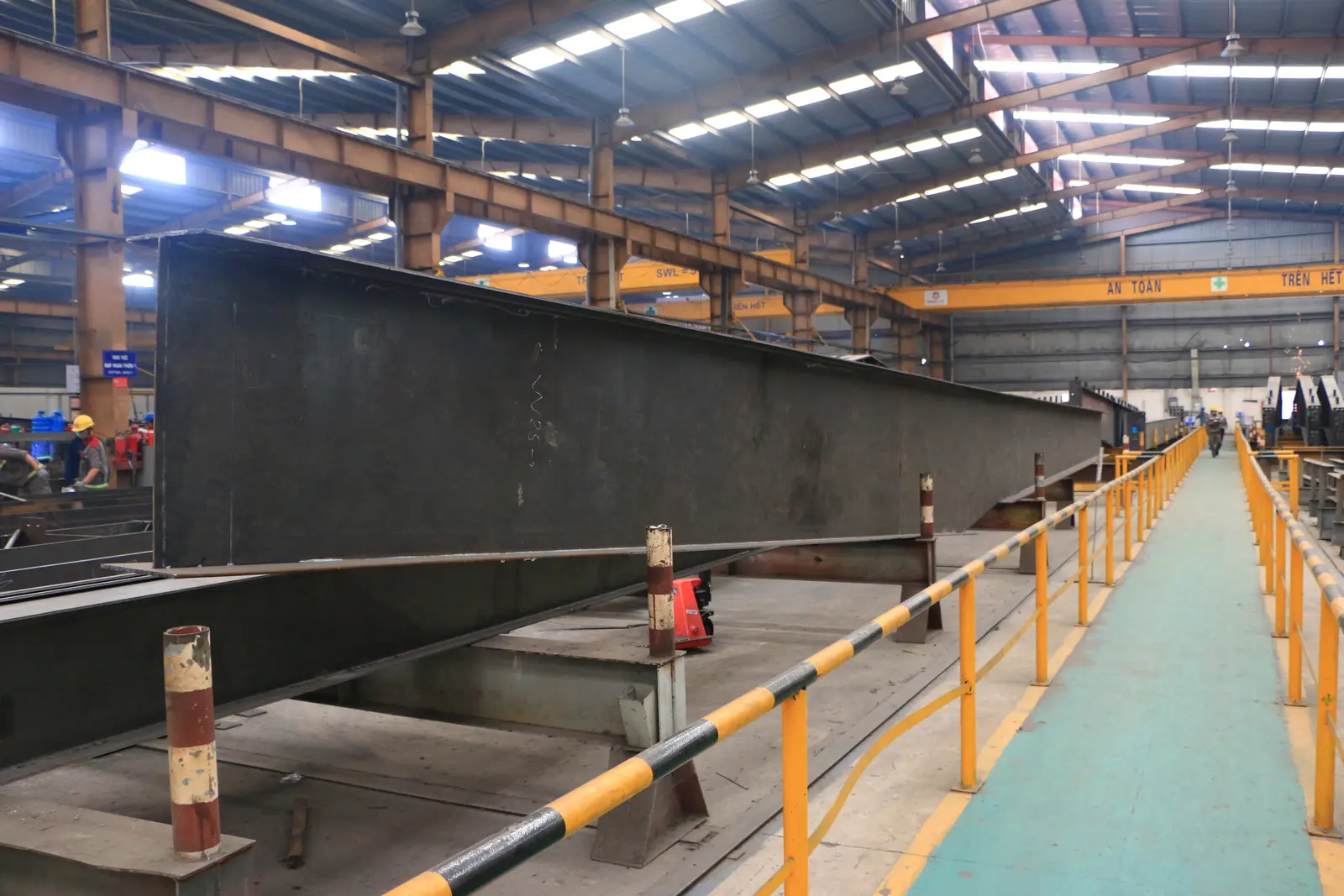
Fabrication process
Fourteen controlled steps in our 20,000 m² factory in Tay Ninh, Vietnam: from mill-certified plate to cut, welded, inspected, blasted and painted members, packed in erection order and loaded for CIF delivery to Thailand. Every member carries a tag that the worker, the foreman and QC sign before it moves on.
Inside the factory
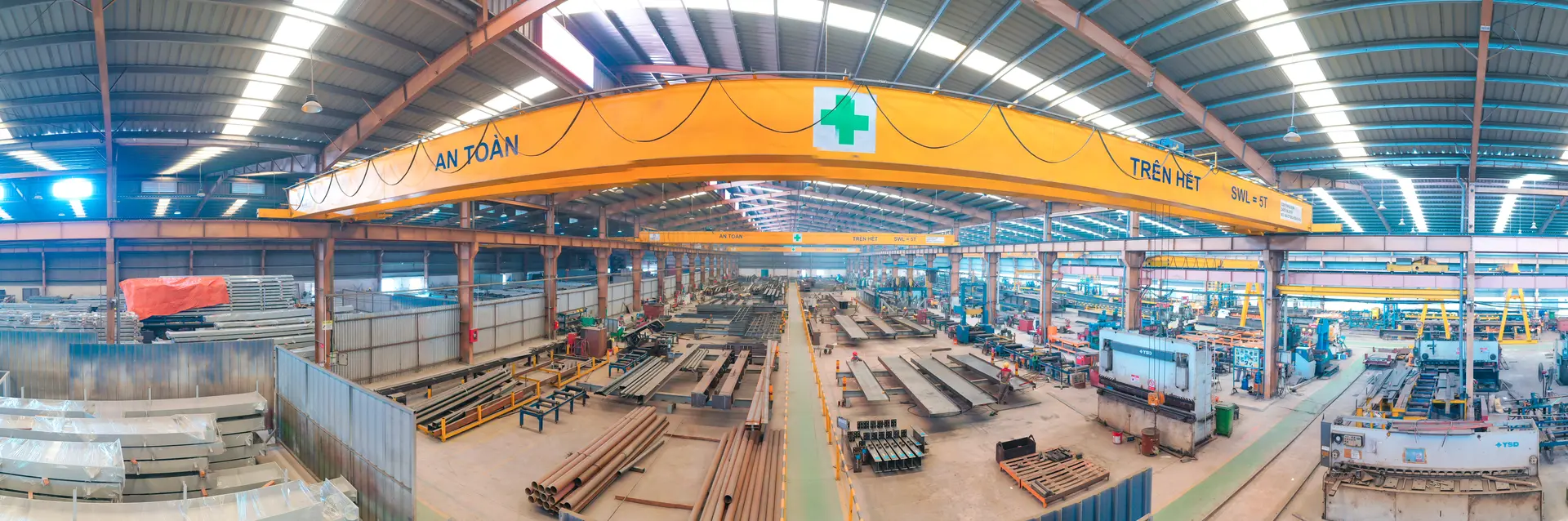
Cutting, drilling, welding, inspection, shot blasting, painting and packing all happen in our own factory, under one quality system certified to ISO 9001, ISO 3834-2 and EN 1090 EXC3. Nothing is subcontracted between the plate and the container, so we can give you a fabrication date and keep it.
Work only starts from shop drawings you have already approved in our post-contract design process, and every workstation is a hold point: a member cannot move to the next station until the process control tag is signed.
Step by step
The sequence follows our fabrication and inspection flow chart and method statement. Each step ends at a QC check; a member that fails goes back for repair and is inspected again.
ReceivingMill-certified plate and sections checked in
ProductionCutting, drilling, built-up beams, fit-up and welding
Blasting & paintingShot blasting, paint system and DFT checks
Packing & loadingMarking, packing, container loading and dispatch
 01
Receiving
Fabrication starts only when the shop drawings are approved and released. Production planning issues the material requisition, and the cutting plan nests every web, flange, plate and stiffener on stock sizes to keep off-cuts and scrap to a minimum. The project Inspection and Test Plan (ITP) is fixed at the same time.
Approved shop drawingsCutting (nesting) planMaterial requisitionITP
 02
Receiving
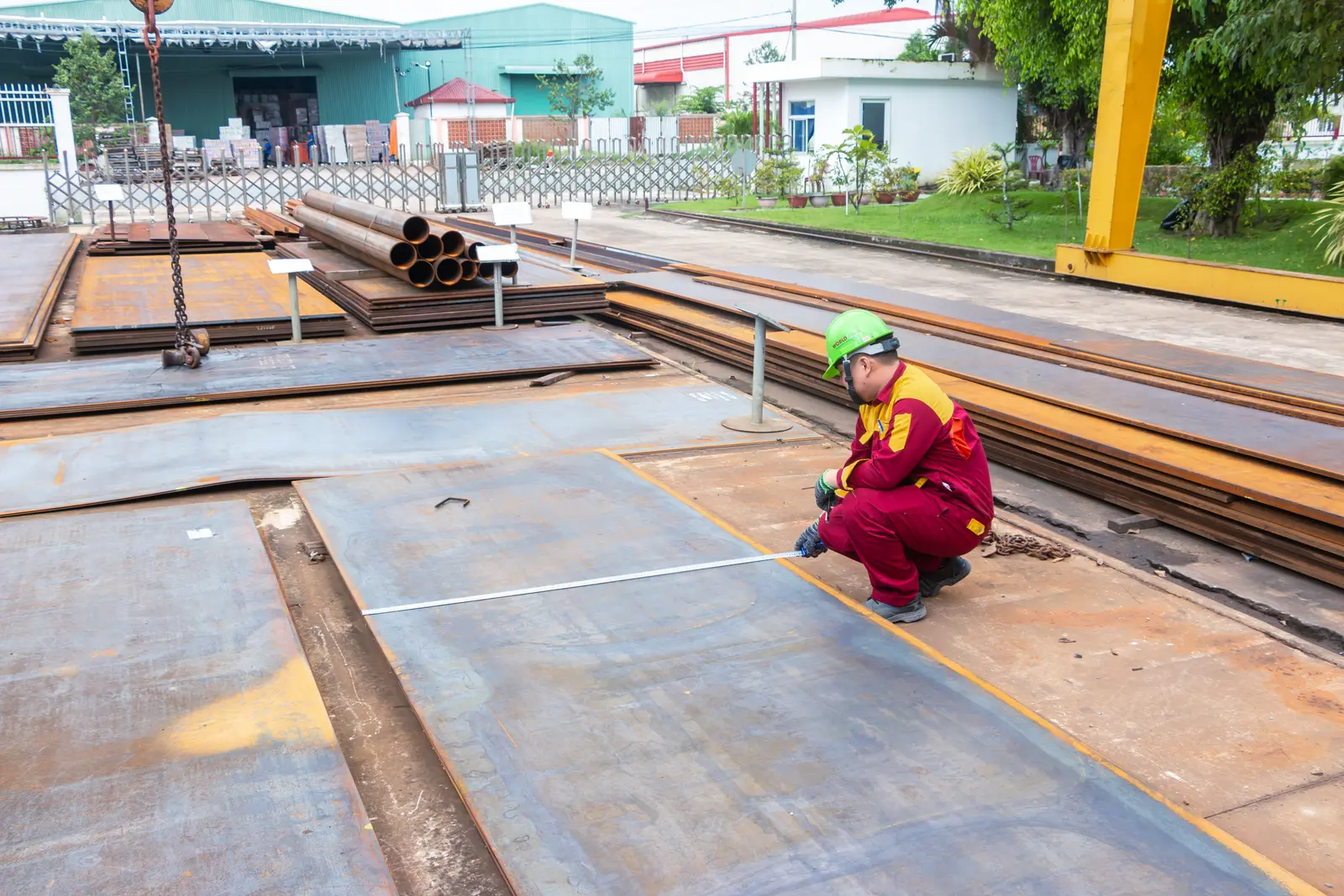
Hot-rolled plates and sections, sourced from mills in Europe, Japan, Korea and Taiwan, arrive with their mill certificates. QC checks grade, thickness, size and surface against the certificate and the order, and the heat number or ID code is recorded so that the material stays traceable. Non-conforming material is tagged on hold and kept apart.
Mill certificatesThickness & dimension gaugesMaterial ID coding
 03
Production
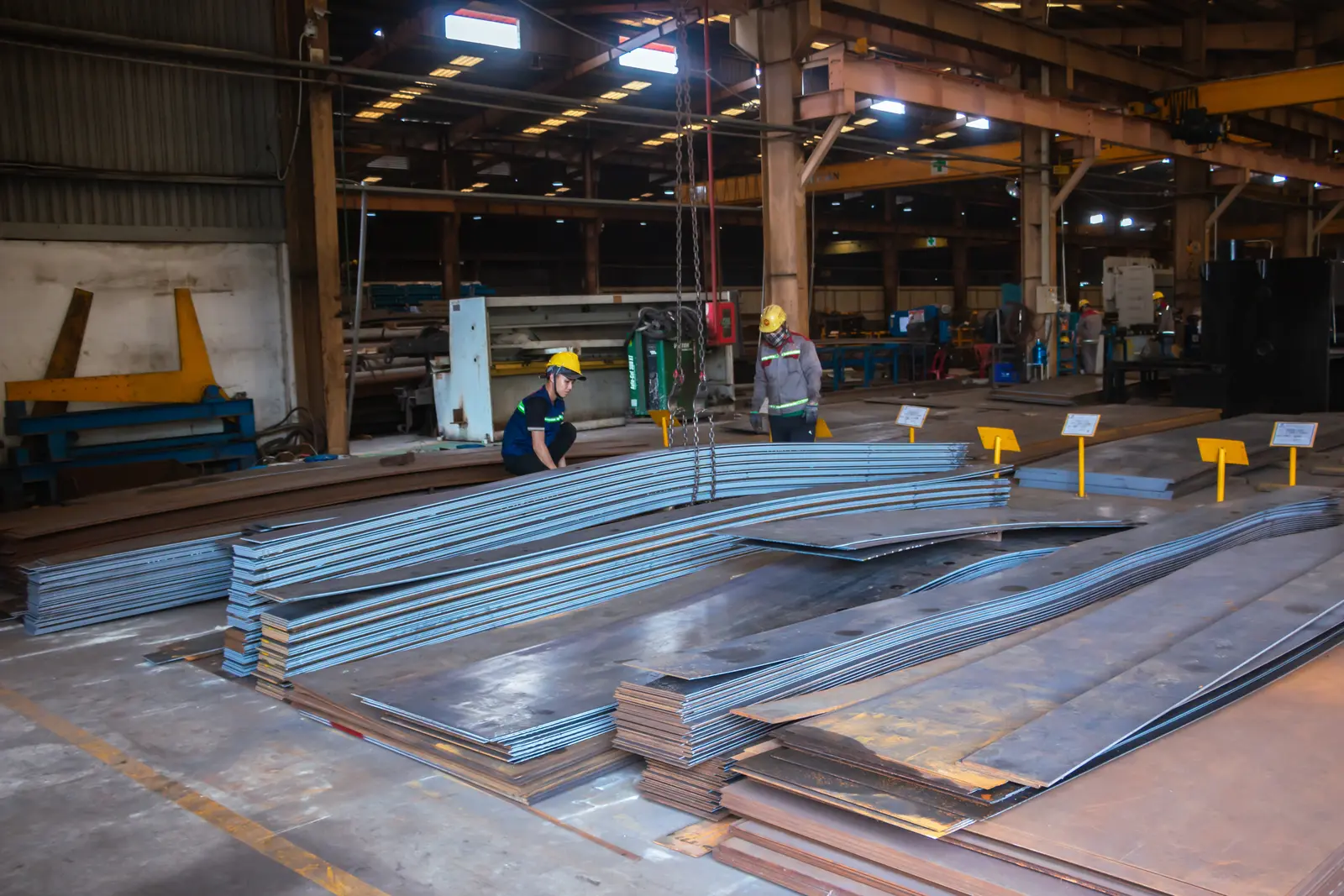
Operators mark cutting lines, gauge lines and drilling points from the cutting plan. Webs and flanges for built-up members are cut in one operation on the CNC multi-torch plasma and gas cutting machine, fine parts on the Bodor fibre-laser cutter, and thinner plates up to 12 mm on the hydraulic shear. Each part gets its piece mark and ID code straight after cutting.
CNC plasma & gas cuttingBodor fibre-laser cuttingHydraulic cutting & shearingBand saw for rolled sections
 04
Production
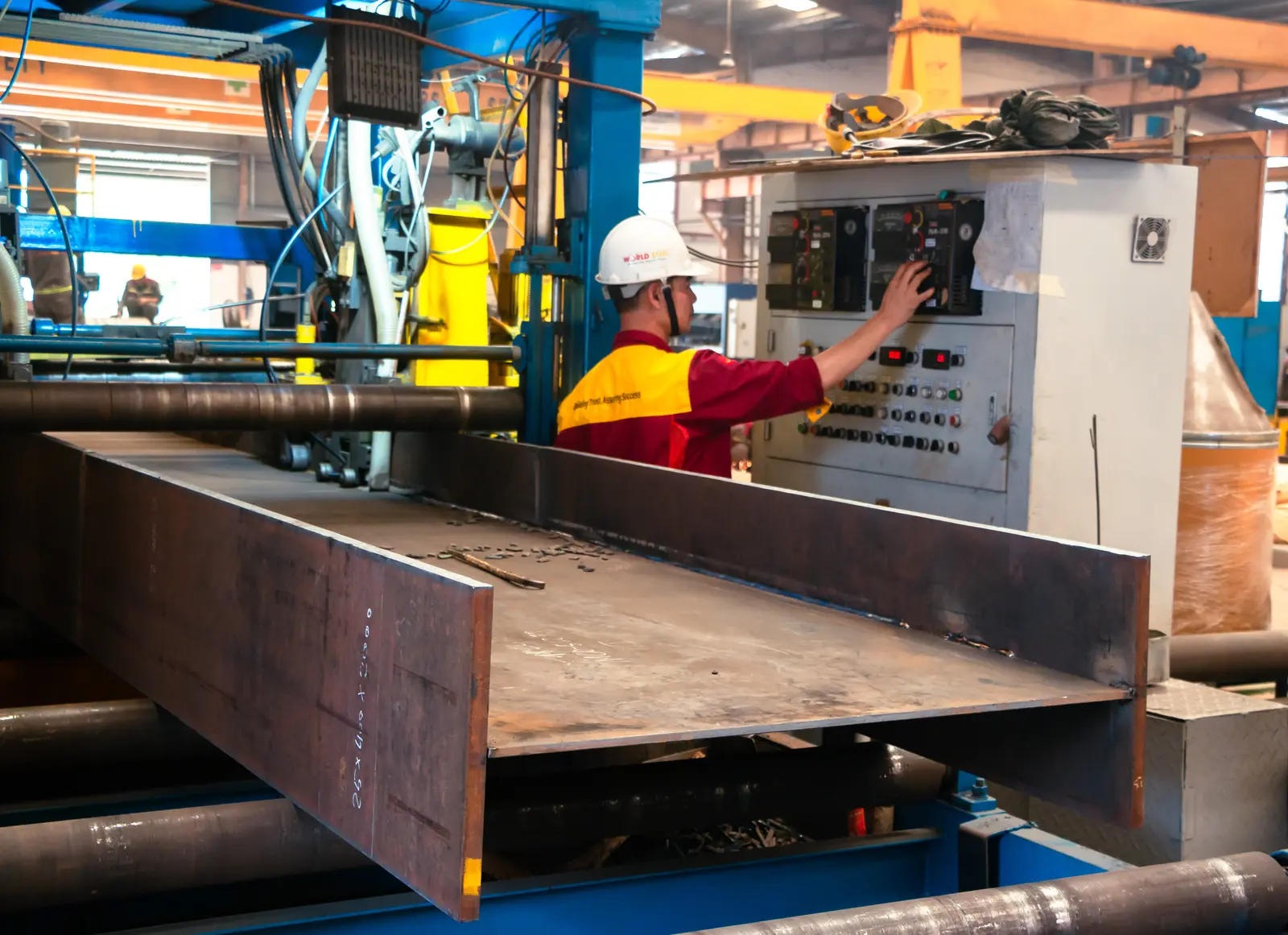
Bolt holes are drilled on the CNC drilling machine or punched on the CNC punching machine, after the hole diameter and count have been checked against the latest shop drawing; portable magnetic drills handle special cases. Rolled H, I, channel and angle sections are cut to length on the band saw. This is where bolts that line up on your Thai site are decided.
CNC drilling machineCNC punching machineMagnetic drillsBand saw
 05
Production
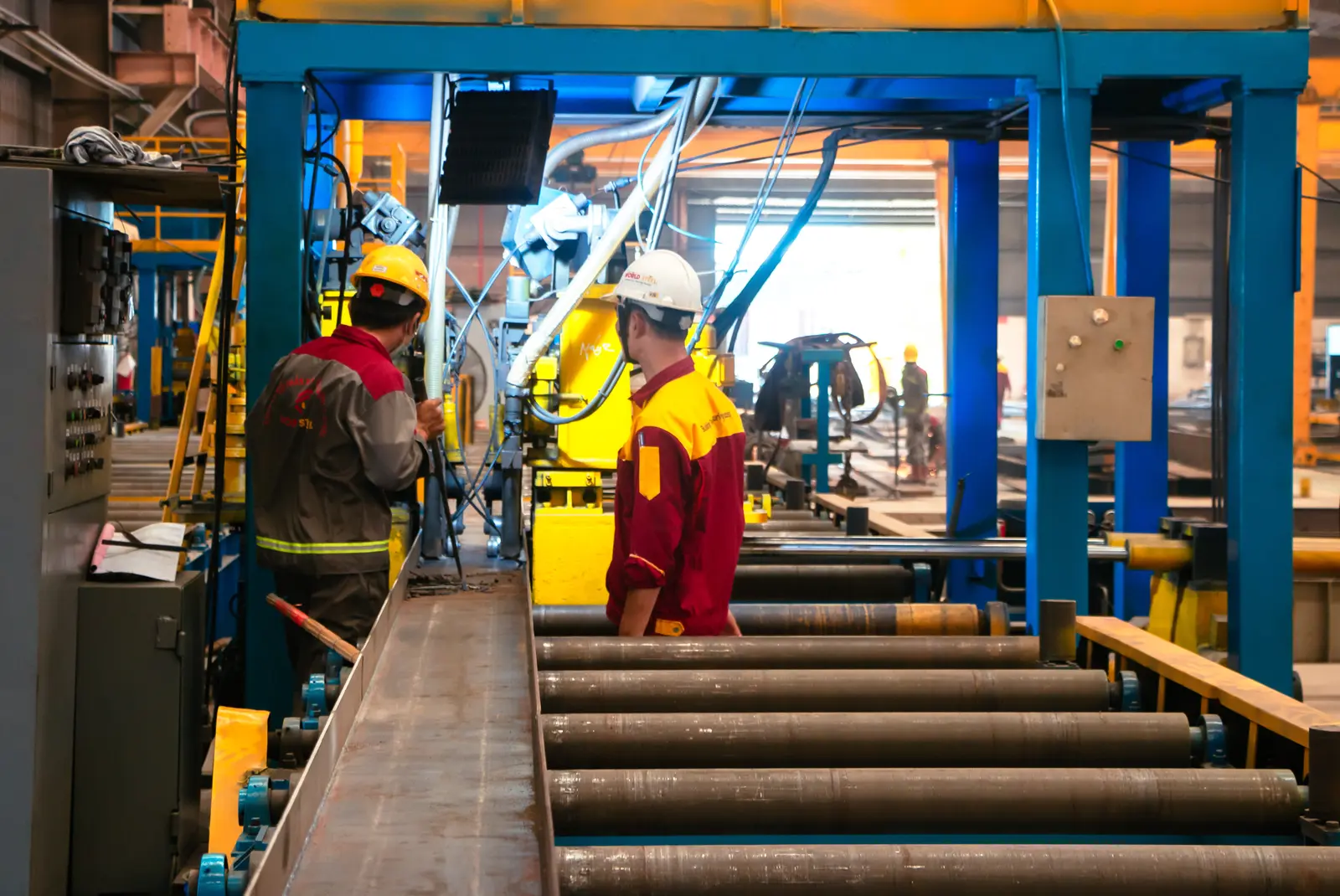
Flange and web plates are spliced to length with full-penetration butt welds, cleaned of loose mill scale, then tack-welded together on the H-beam assembly line with the web exactly on the flange centre line. Tapered PEB rafters and columns are built the same way, so steel goes only where the forces are.
H-beam assembly lineFCAW welding for splices
 06
Production
Web-to-flange fillet welds run on the automated beam welding line and gantry beam welding machines using submerged-arc welding (SAW), with single or twin wires under granular flux for deep, even, low-spatter welds. The beam then goes through the beam straightening machine to correct flange distortion before fit-up.
Automated beam welding line (SAW)Gantry beam welding machineBeam straightening machine
 07
Production
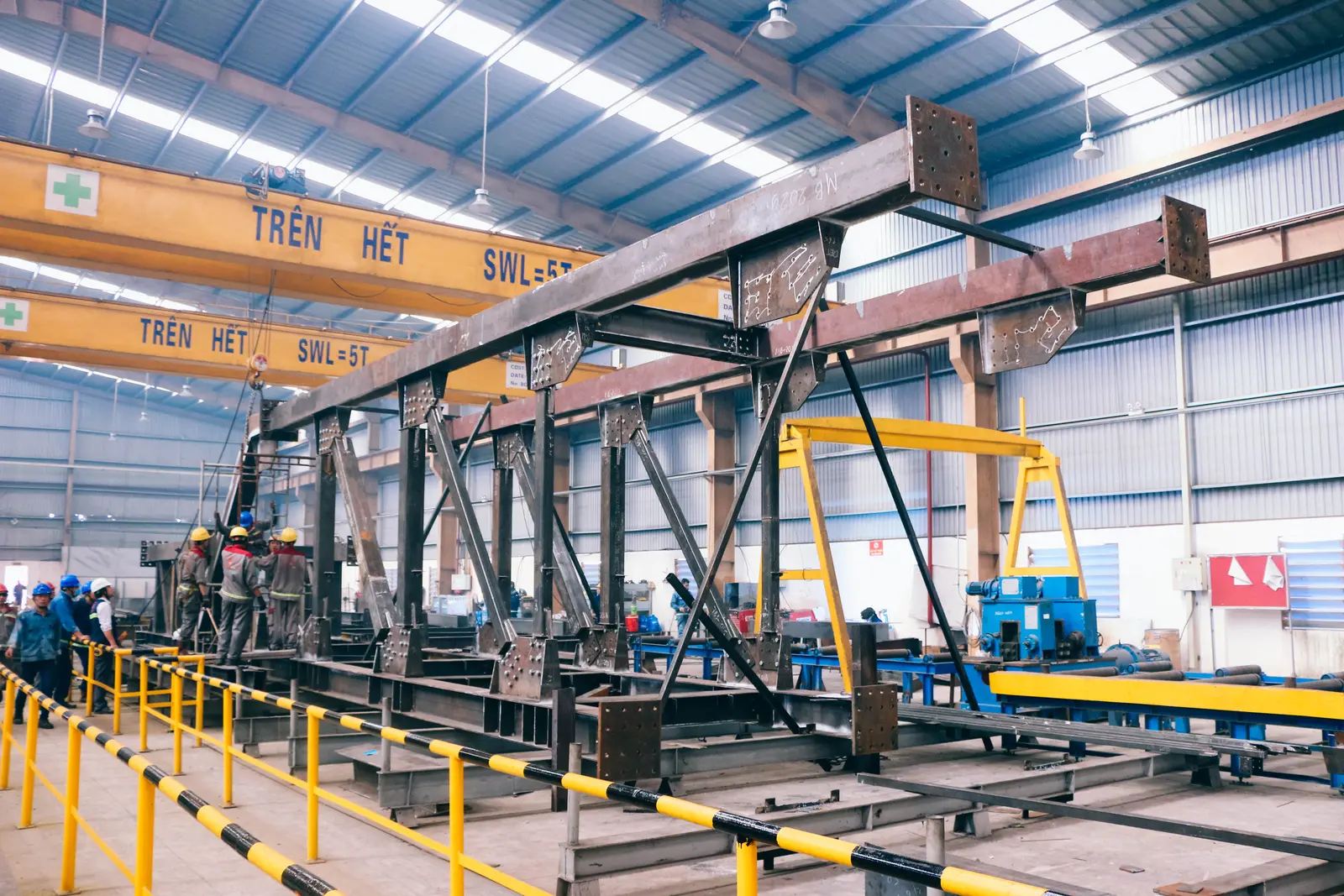
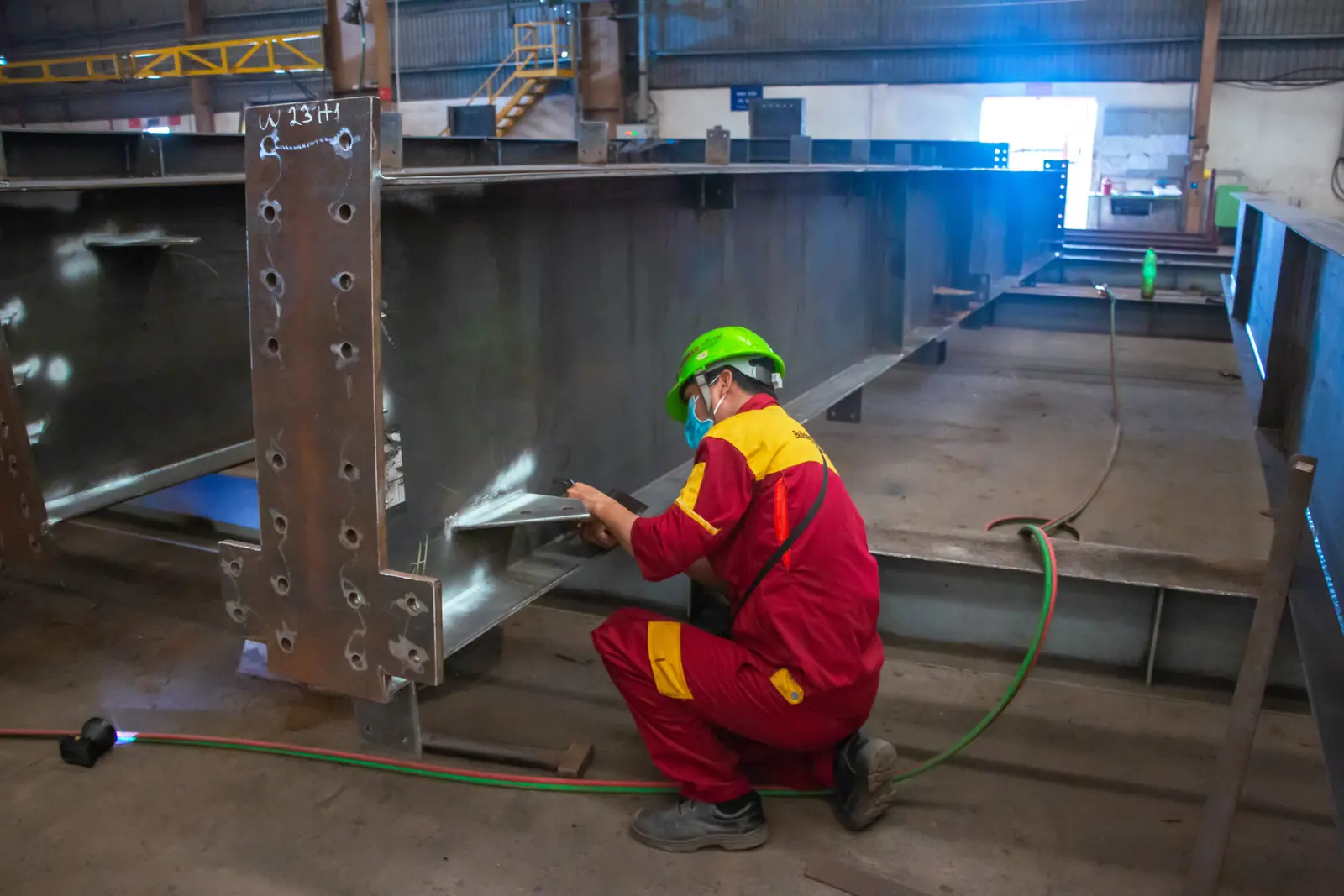
Fitters read the shop drawing, mark centre lines and working points, then fit end plates, base plates, stiffeners, gussets and cleats with tack welds placed where the full weld will cover them. Full-penetration joints are prepared to the WPS, with a maximum root gap of 3 mm.
Fit-up tables & positionersJacks, lever and chain blocks
 08
Production
Qualified welders, tested to AWS D1.1, complete all shop welds to the written welding procedure specification (WPS), with members positioned flat or horizontal wherever possible. Base metal over 38 mm thick, or where the WPS requires it, is preheated. Run-on tabs are used at weld ends and removed by grinding, and each welder checks and cleans his own work.
FCAW and SAW weldingPreheating equipmentWPS / PQR
 09
Blasting & painting
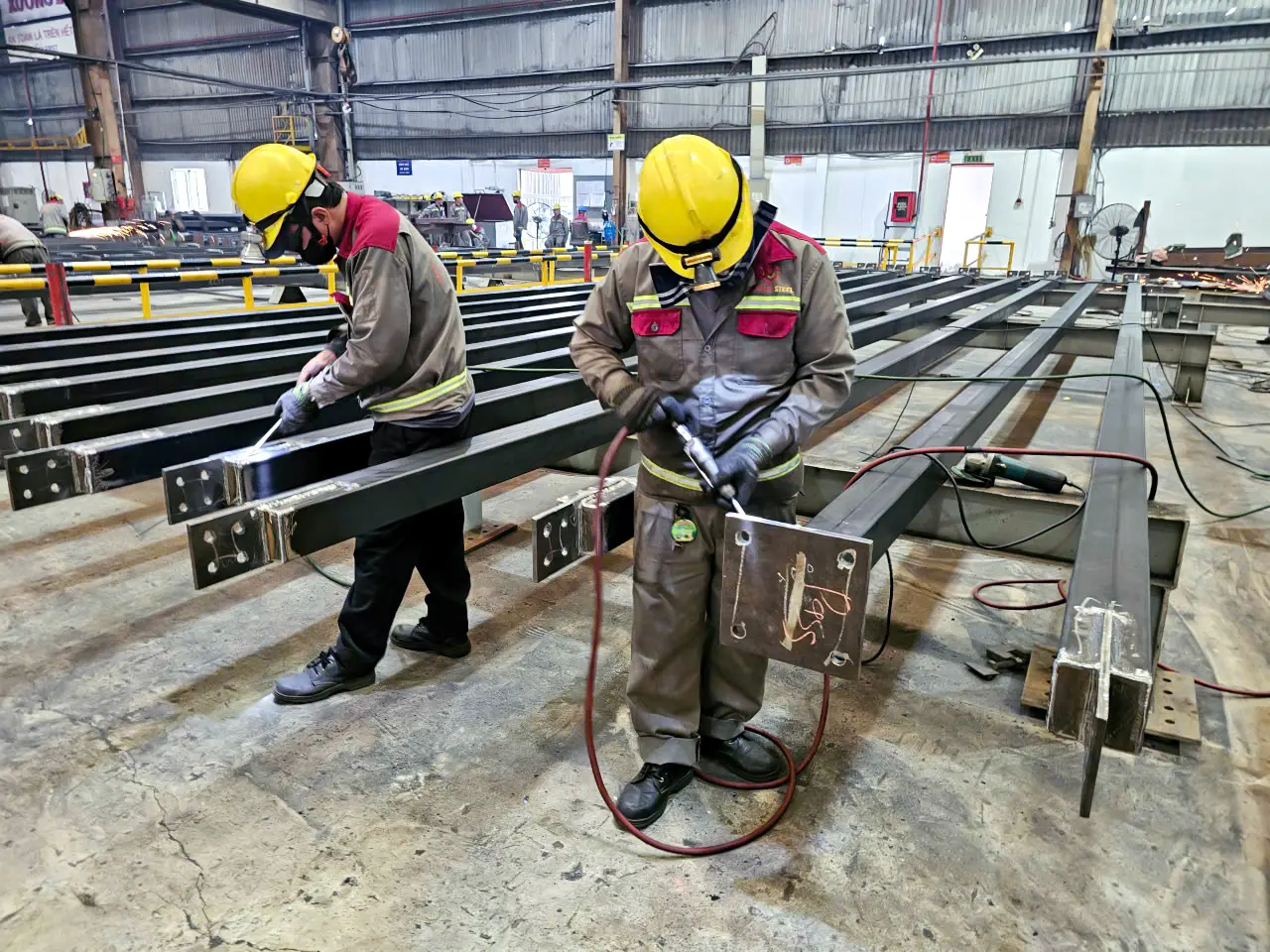
QC inspects every weld visually and checks the finished member against the drawing. Non-destructive testing, ultrasonic (UT) and magnetic particle (MT), is carried out to the scope set in the project ITP or specification. Defects are marked, repaired by the repair team and re-inspected before the member can move on.
UT and MT testingWeld gaugesMeasuring tapes and squares
 10
Blasting & painting
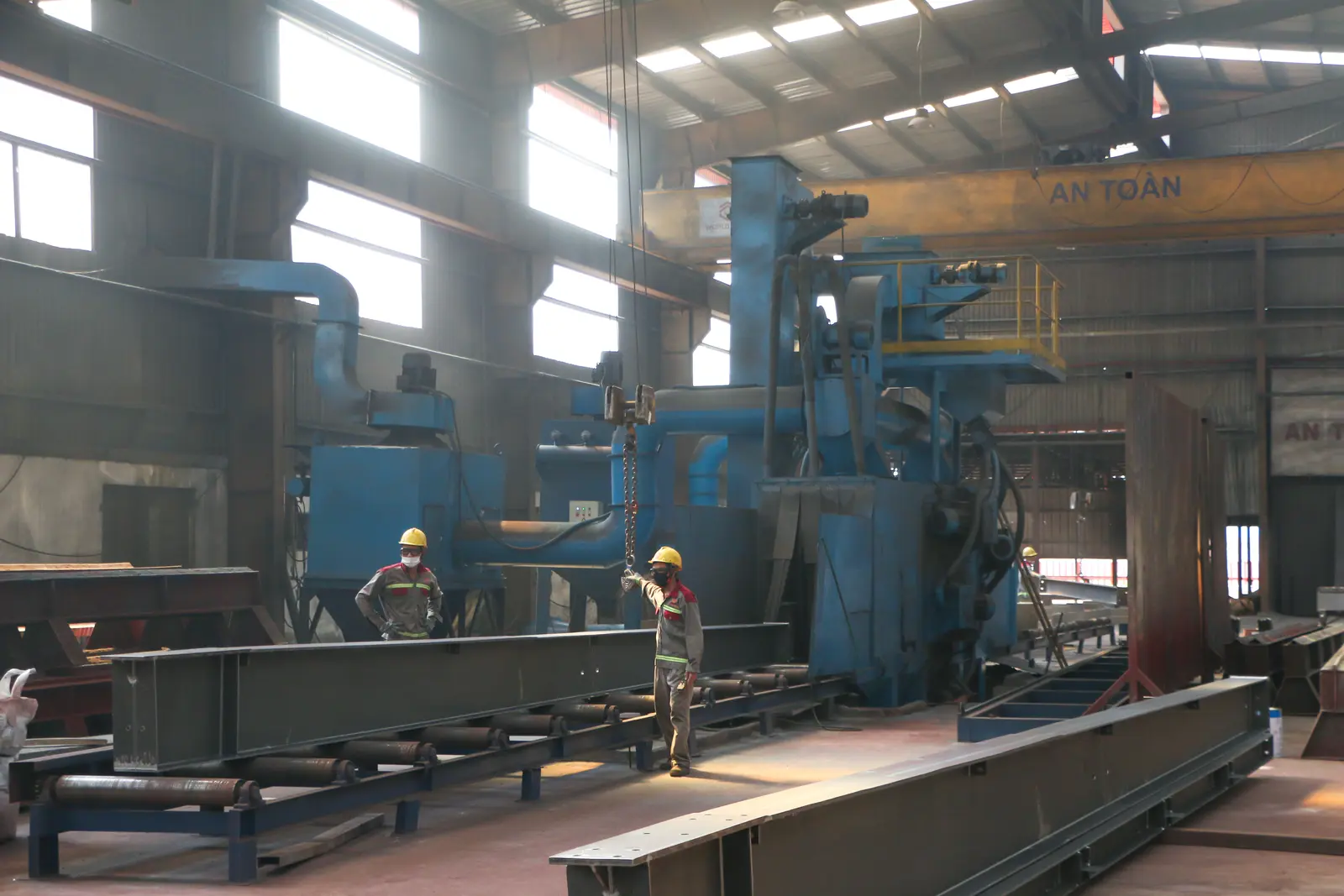
Weld spatter, sharp edges, oil and grease are removed first. Members then pass through the shot blasting machine indoors, with dry, clean abrasive selected for the steel and the surface profile required. The cleanliness and profile are checked by visual comparison and with a profile comparator gauge, typically to Sa 2½ (ISO 8501-1) or the grade in your paint specification.
Shot blasting machineProfile comparator gauge
 11
Blasting & painting
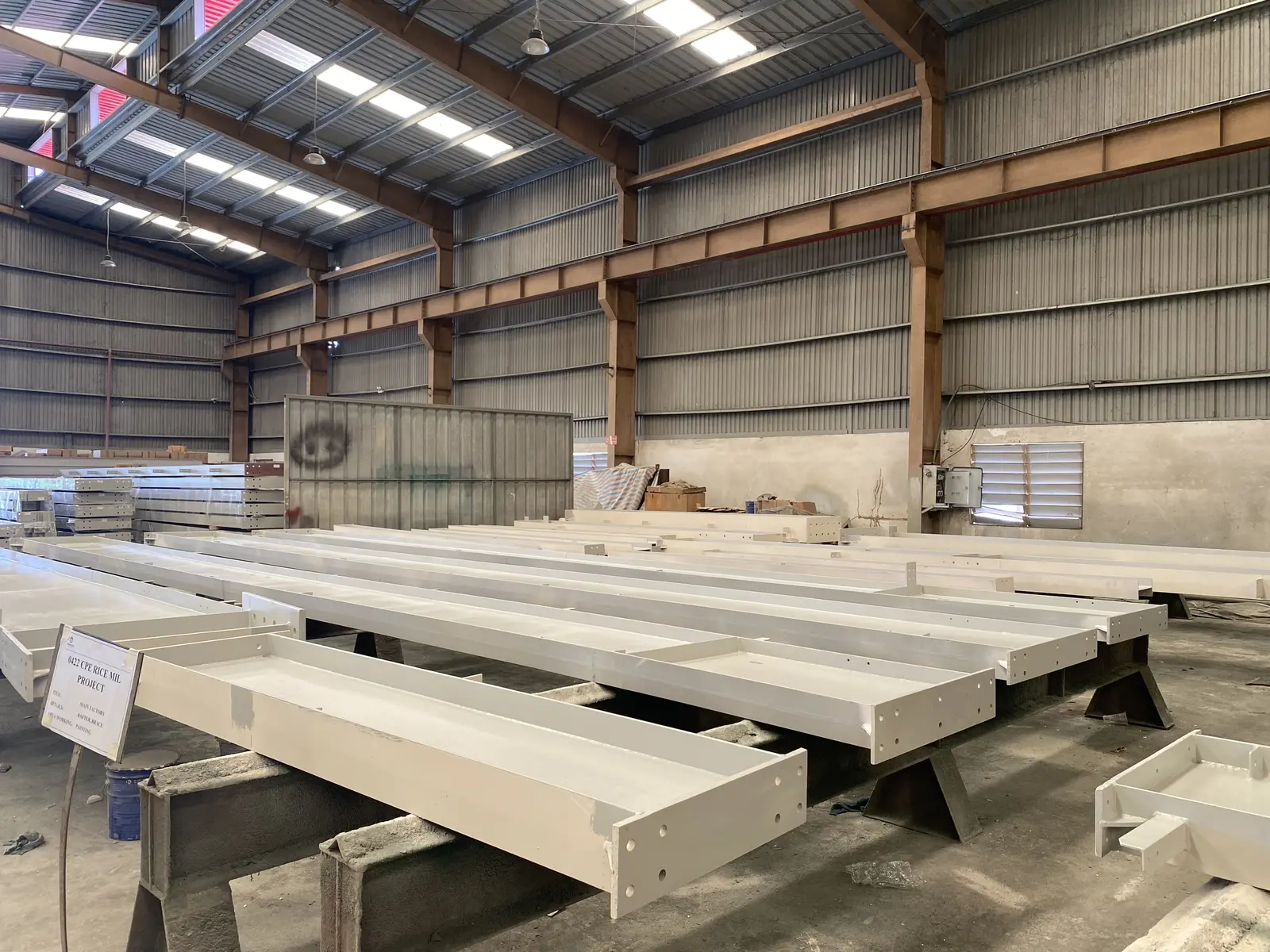
Blasted surfaces are blown dust-free and painted with the paint system chosen for your site, by airless spray with each pass overlapping the last by 50%. No paint is applied when the steel is less than 3 °C above the dew point. Dry film thickness (DFT) is measured on every coat; fire-protection (intumescent) coatings are applied in the same controlled bays.
Airless spray equipmentDFT gaugesHygrometer & surface thermometer
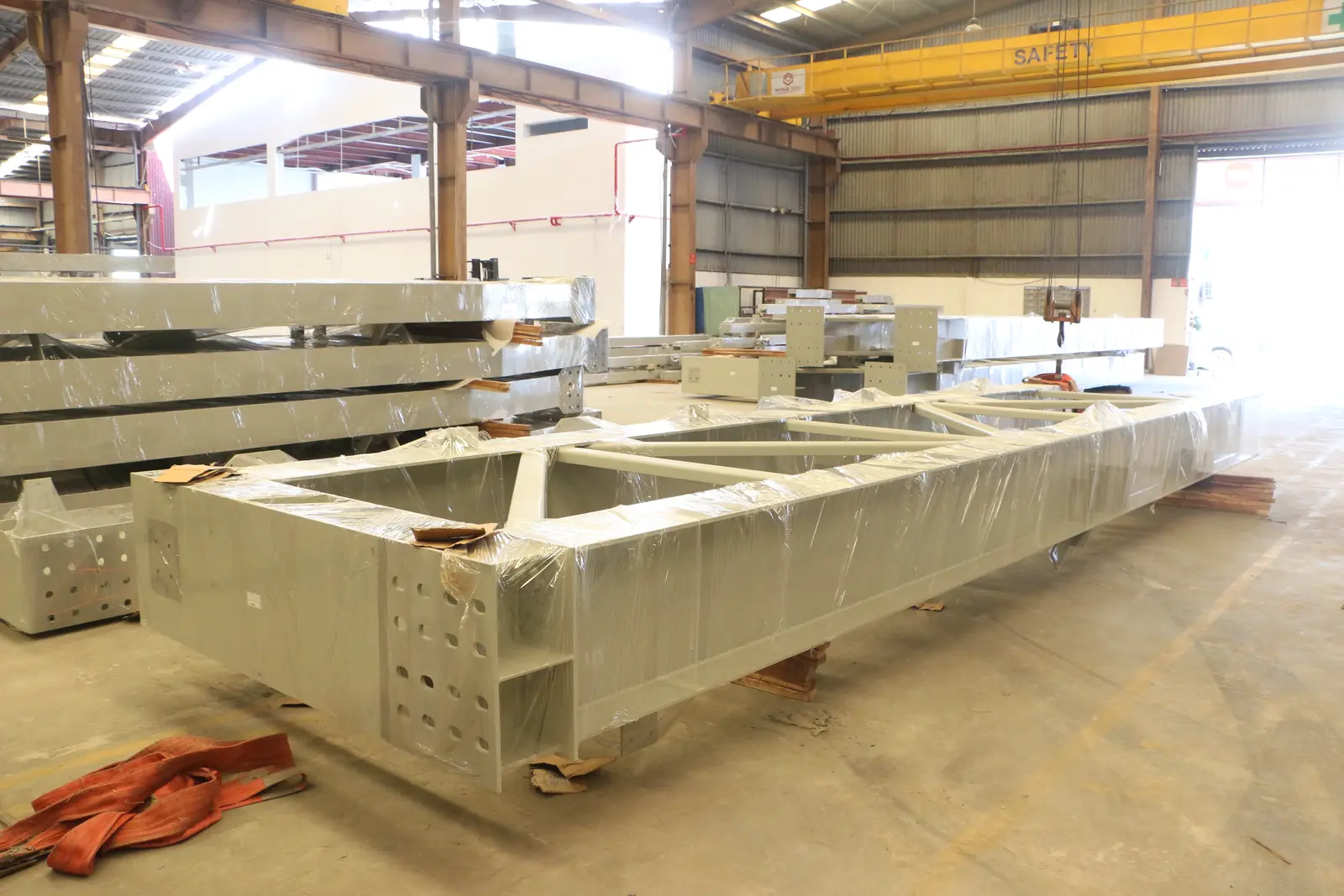 12
Packing & loading
Each member keeps its piece mark from the shop drawing, so your erection team can find it on the erection drawing and in the packing list. When every signature on the process control tag is complete and the final inspection is accepted, QC attaches the green Pass sticker and releases the member for packing.
Component coding systemProcess control tagPass and On-hold stickers
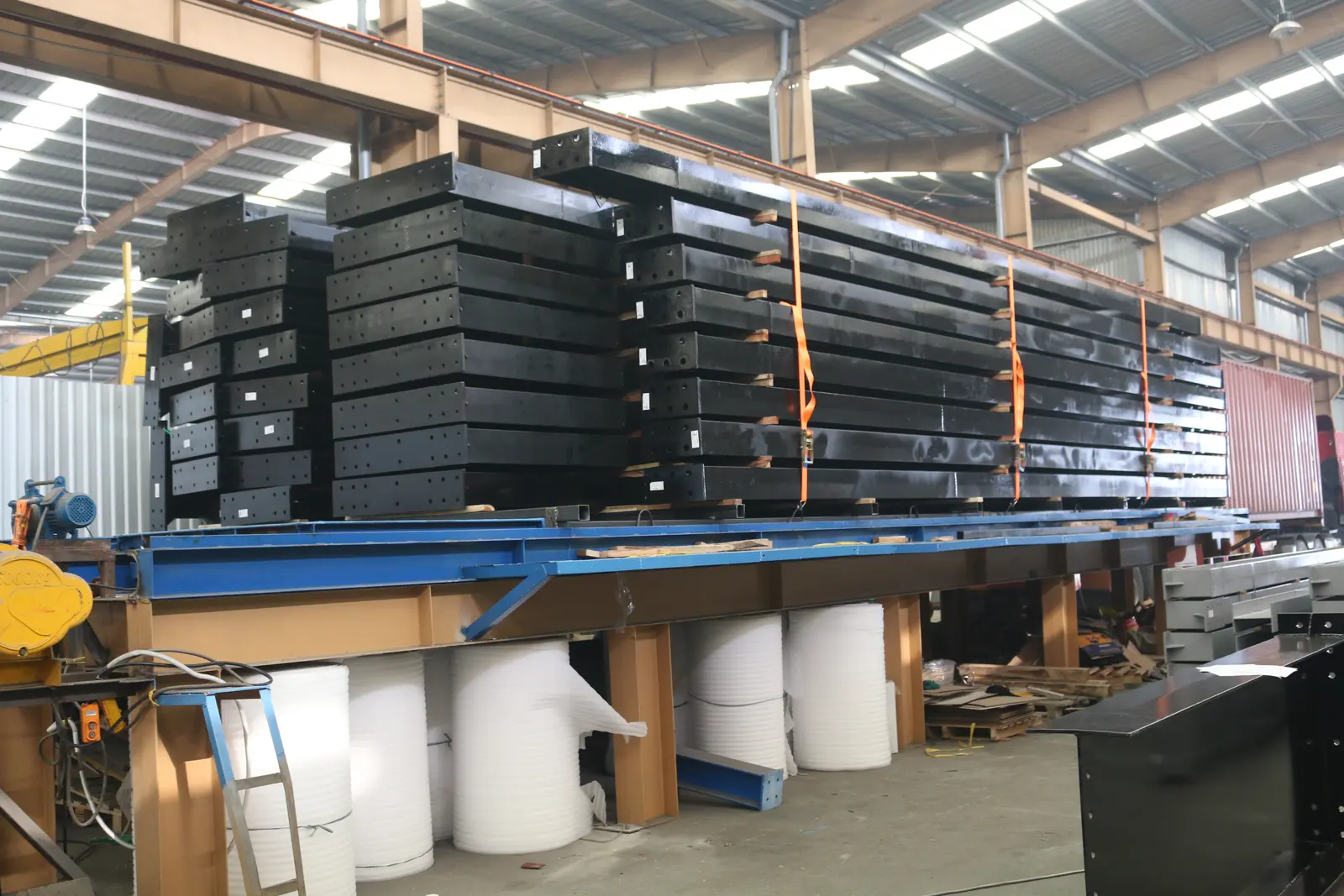 13
Packing & loading
The packing plan is issued 10 days ahead so that timber, straps and frames are ready. Members are grouped by shape, size and erection sequence; small parts and bolts go into bundles, pallets or sealed crates with their packing list; long items are bundled on timber with steel straps, and wrapped in PE film when required. Straps never touch the paint directly: foam or hard carton sits underneath.
Timber 20×80 / 40×80Steel strapsPE film & foamPallets and crates
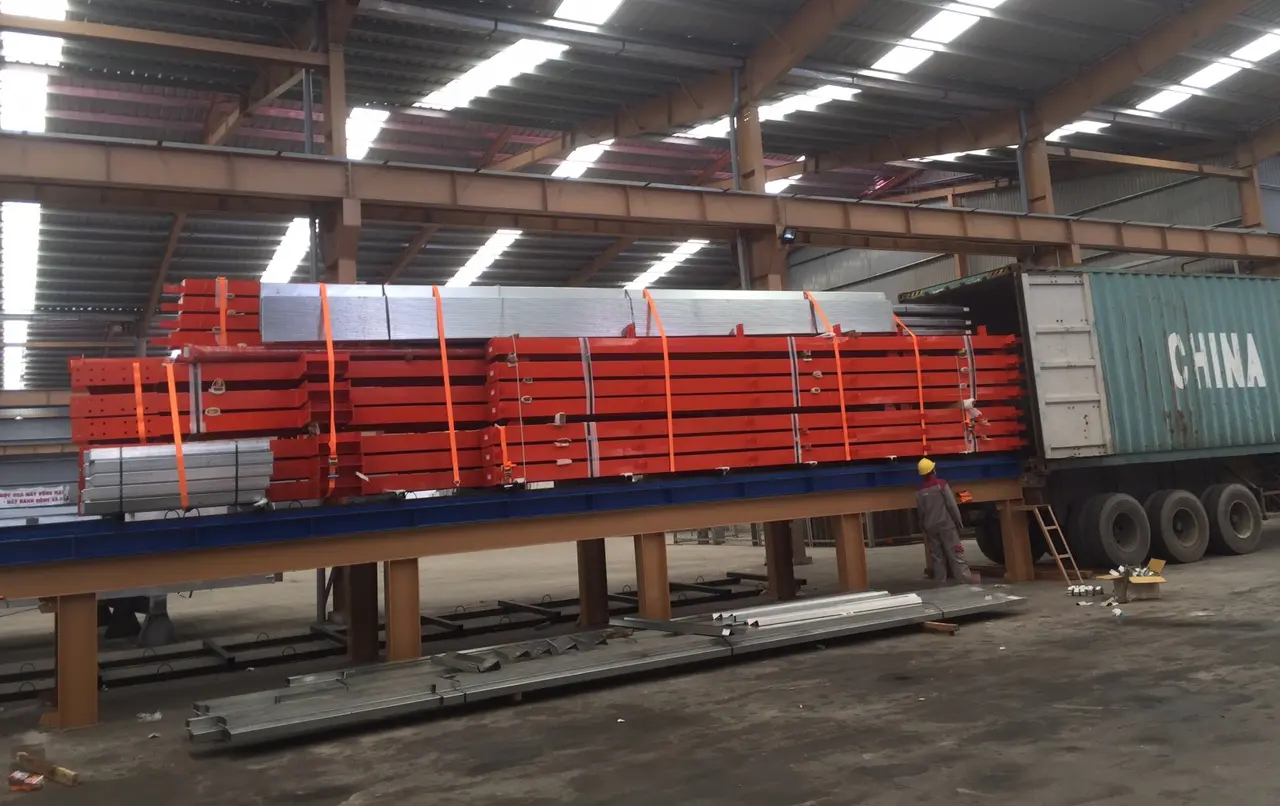 14
Packing & loading
Bundles are loaded in layers on a support frame for 20 ft or 40 ft containers, with foam or fabric at every contact point, then pushed into the container. Lifting points are protected and items over 5 m are lifted with a spreader bar. QC checks the load and signs before it leaves; the delivery note goes on the container, the seal is photographed, and the final packing list goes to our export team for CIF shipping to Thailand.
Container support frames & pusherOverhead cranes & spreader barsLashing cables
Process control
Every structural member carries a process control tag from cutting to release. The worker, the foreman and the QC inspector each sign their station with the date, so responsibility for each piece of work is always clear.
WORLD STEEL · PROCESS CONTROL TAG
Part mark: C1-12
| Worker | Foreman | QC | |
|---|---|---|---|
| Built-up H beam | |||
| Fitting | |||
| Welding | |||
| Dimension & visual | |||
| Blasting & painting |
ON HOLDPASS
Materials
Raw materials come from mills in Europe, Japan, Korea and Taiwan, always with certificates of origin and mill test certificates, and conform to ASTM, EN, JIS, BS or AS/NZS standards. On request we supply EN 10204 type 3.1 certificates for your Thai consultant.
| Standard | Typical grades |
|---|---|
| ASTM A572/A572M | Grade 42, 50, 55, 60 – hot-rolled plate |
| EN 10025 | S235, S275, S355 (JR, J0, J2, K2) |
| JIS G3106 | SM400, SM490, SM490Y – plate for welded structures |
| AS/NZS 1594 | HA300, HA350 – hot-rolled flat products |
| ASTM F3125 | A325M / A490M high-strength bolts |
Equipment
Packing & loading
From our packing procedure. The goal is simple: members arrive at your Thai site with the paint intact and in the order your erection team needs them.
No lifting point without protection; slings never bear on bare paint.
Long rod and angle bracing and purlins are lifted with a spreader bar.
Belts sit on foam or hard carton, never directly on the finished product.
Timber supports wrapped in foam keep members apart in every layer.
Bundles, pallets and crates carry their own list, matched to the erection drawings.
Steel supports welded on the loading skid are shielded to avoid burn marks.
Finished members are covered with tarpaulin in the shop and in the yard.
Skid plates are screwed to the container floor so the load cannot shift at sea.
QC inspects the load and signs the release before it leaves the factory.
Packing, loading and the container seal are photographed and kept on file.
Your records
For Thailand
CNC-drilled holes checked against approved shop drawings mean no re-drilling or site welding in the industrial estate.
2,500 T a month under one roof: a 100 T project is fabricated in 3–4 weeks after release.
Blasting and paint applied indoors with DFT recorded, using the system and brand your consultant specifies.
Bundles packed by erection sequence and shipped CIF to Laem Chabang, Bangkok, Map Ta Phut or Songkhla.
Real photos
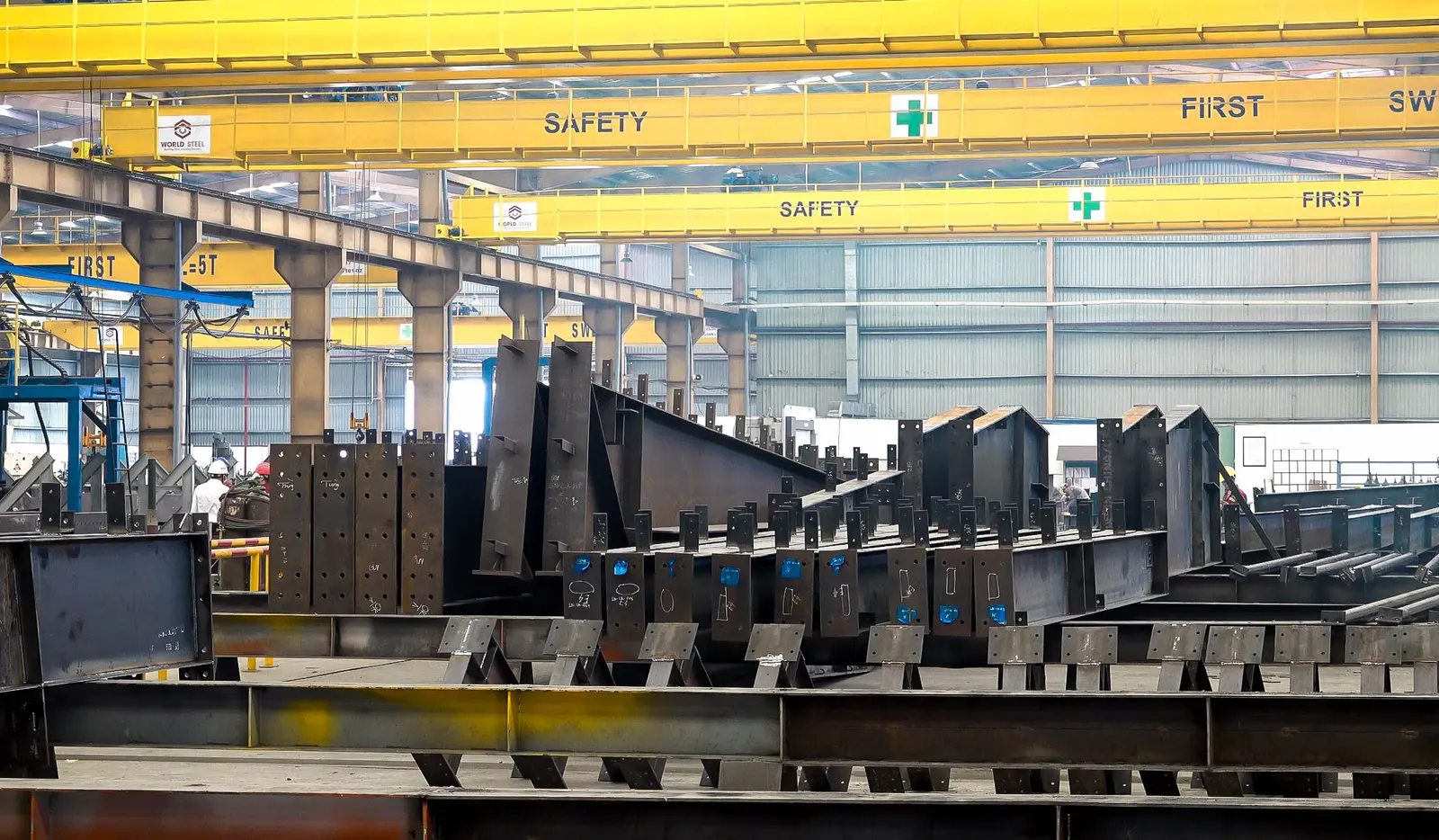
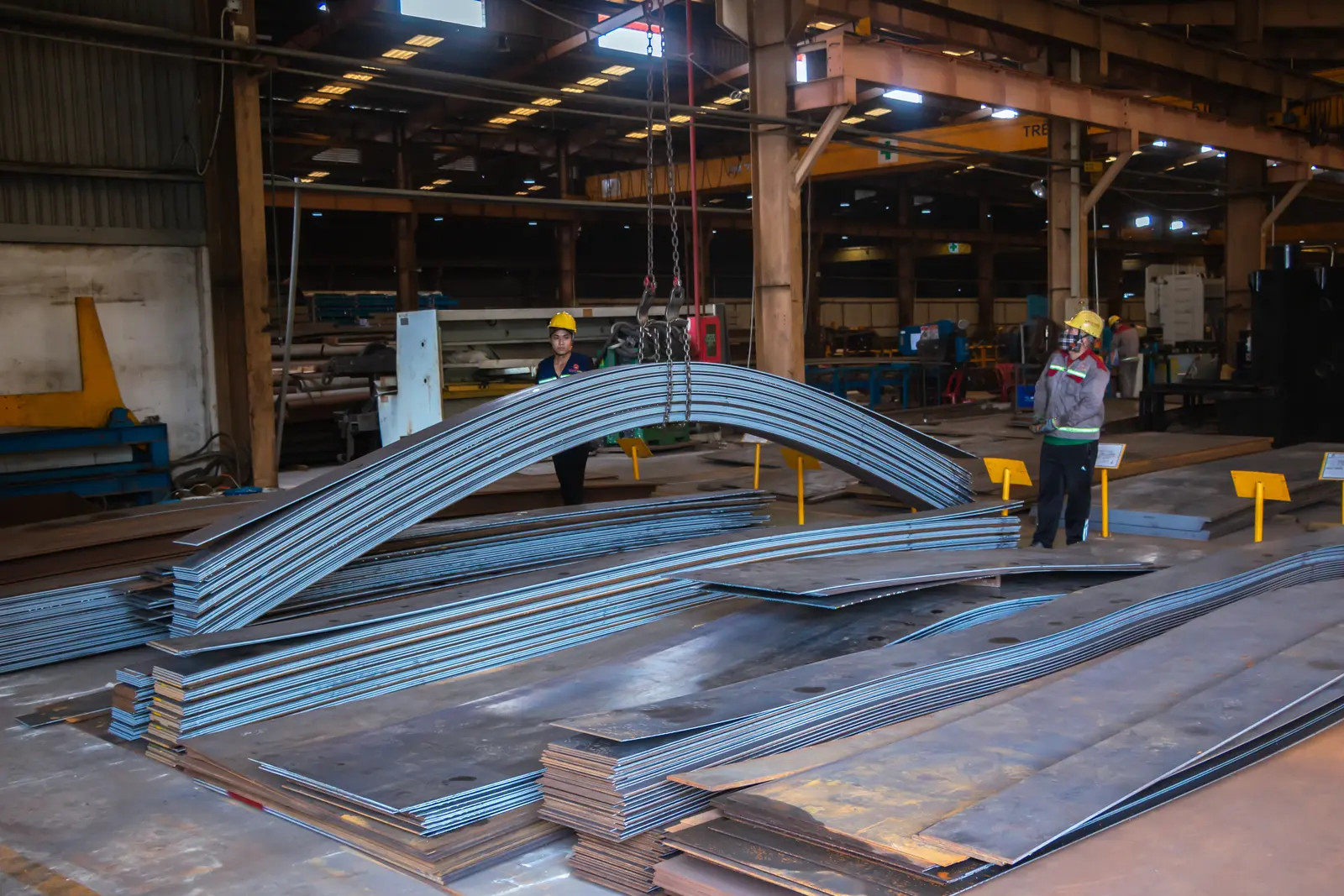 Cut flange and web strips ready for built-up beams
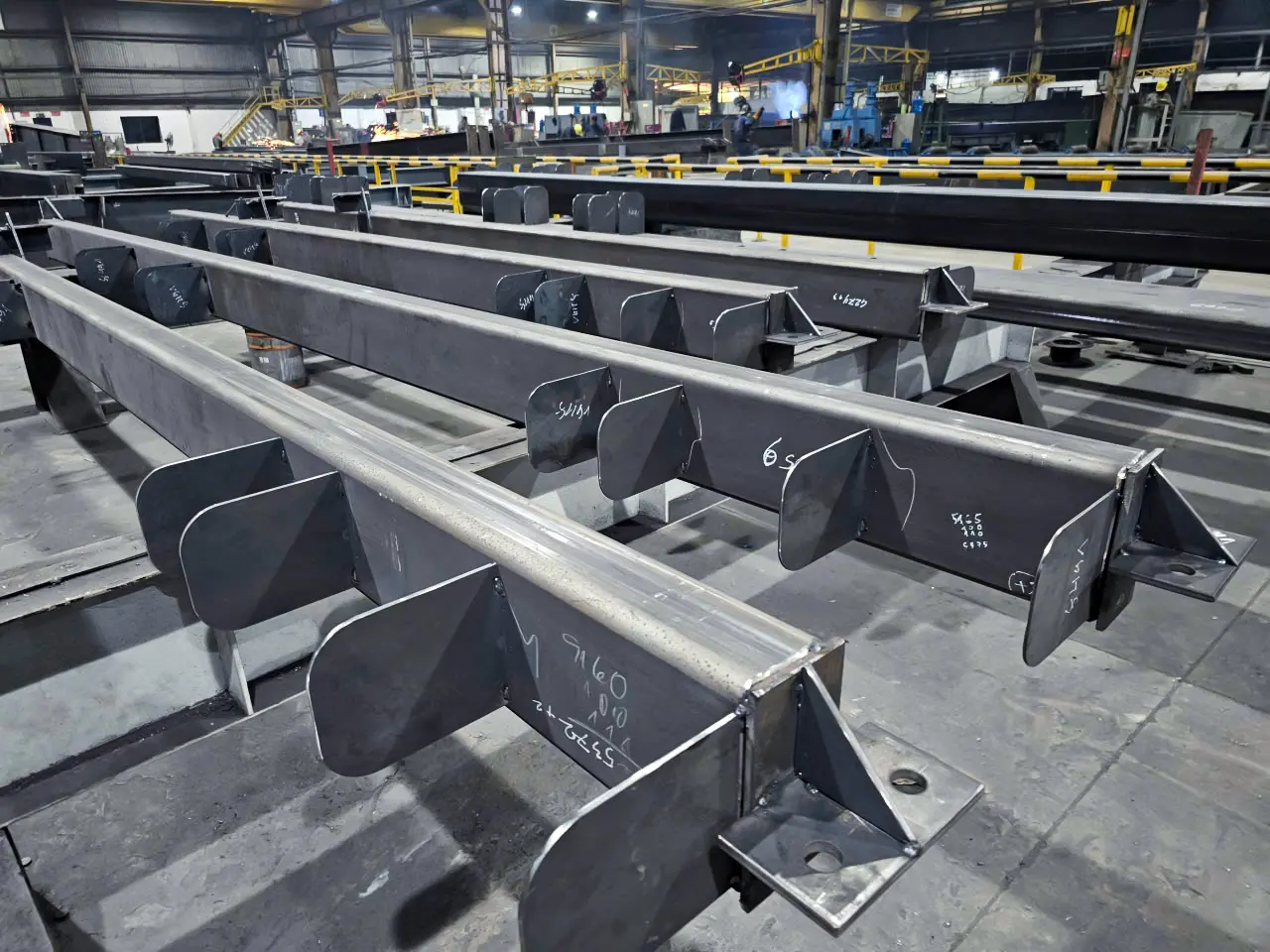 Members after fit-up of stiffeners and end plates
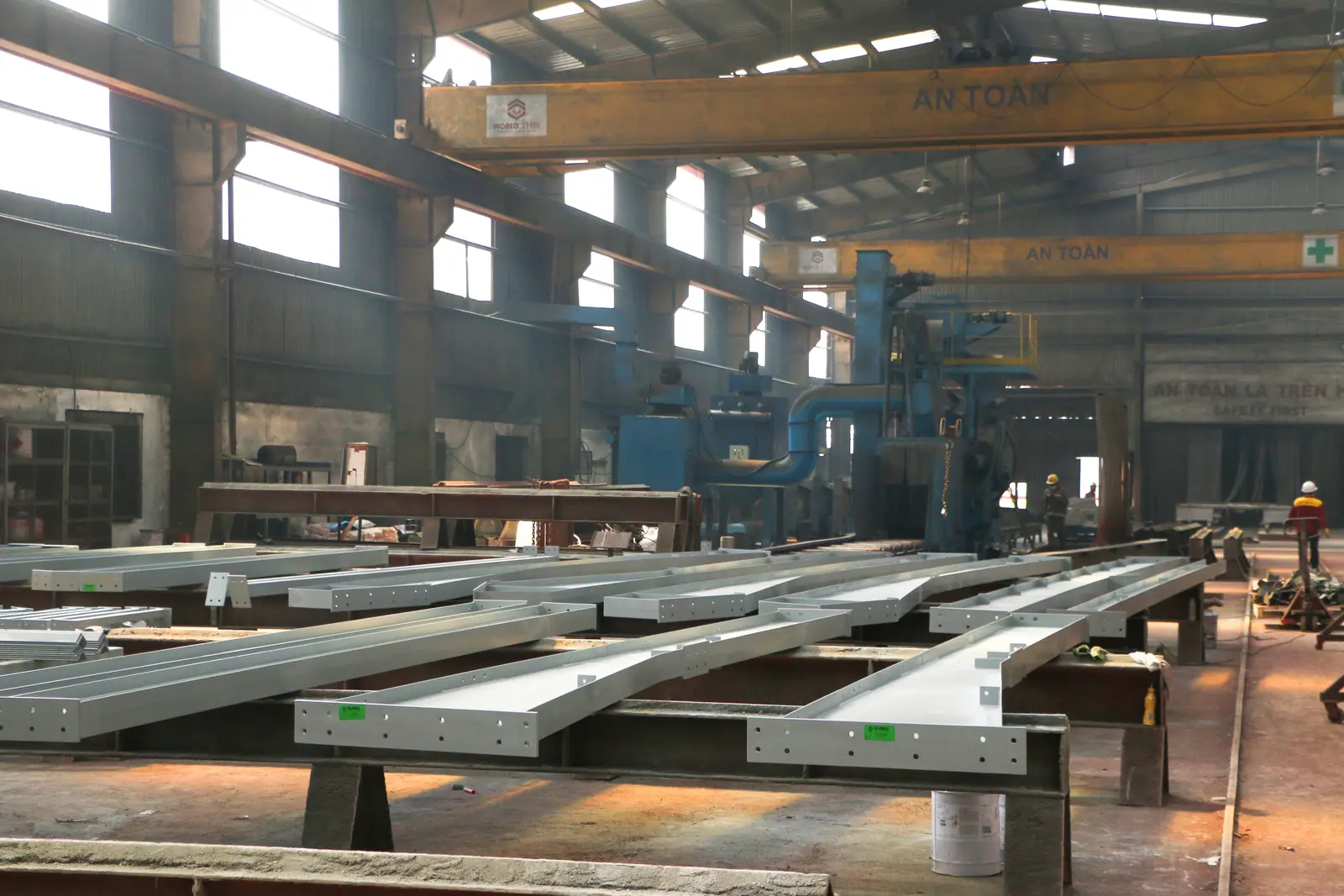 Members waiting at the shot blasting machine
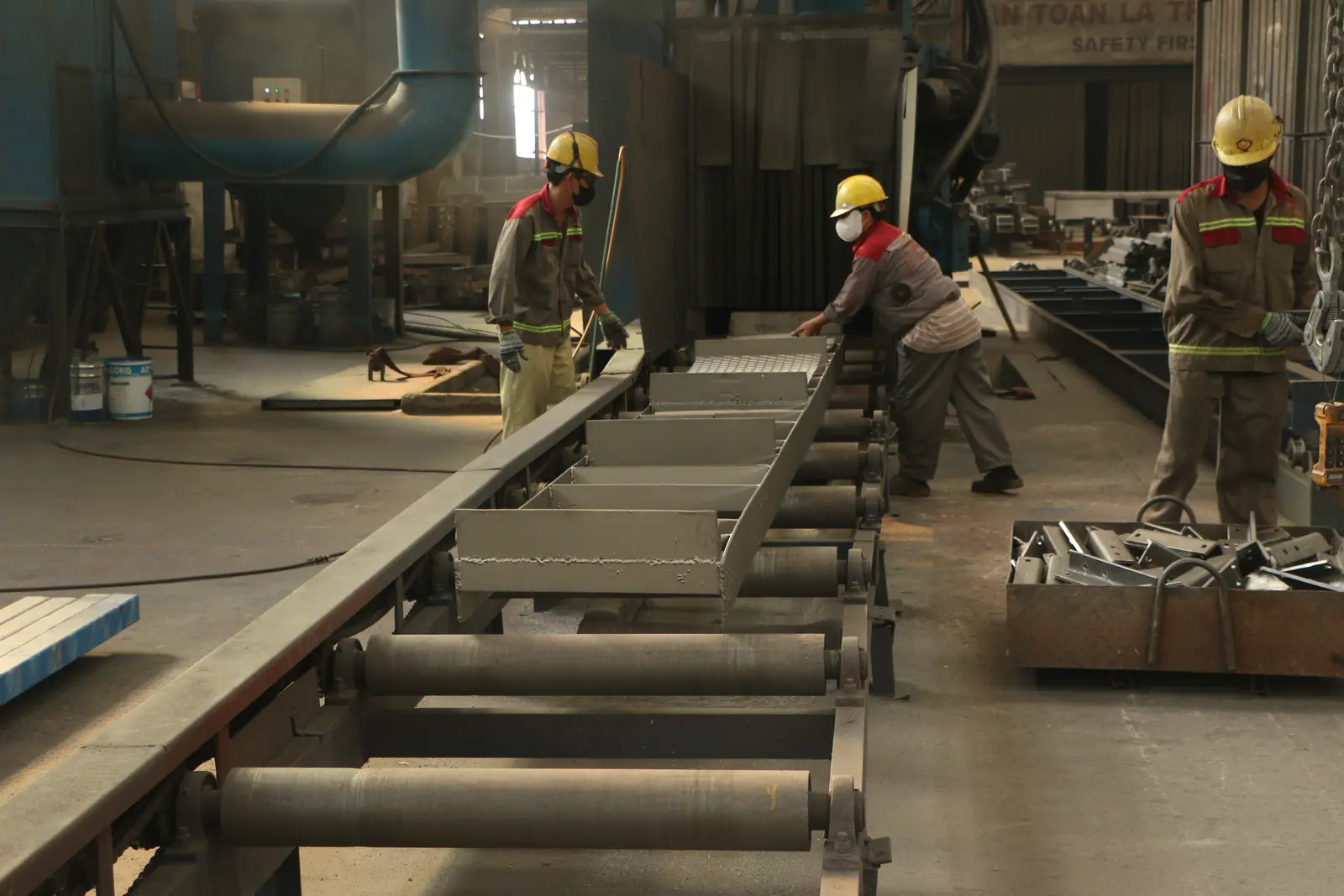 Members fed into surface preparation
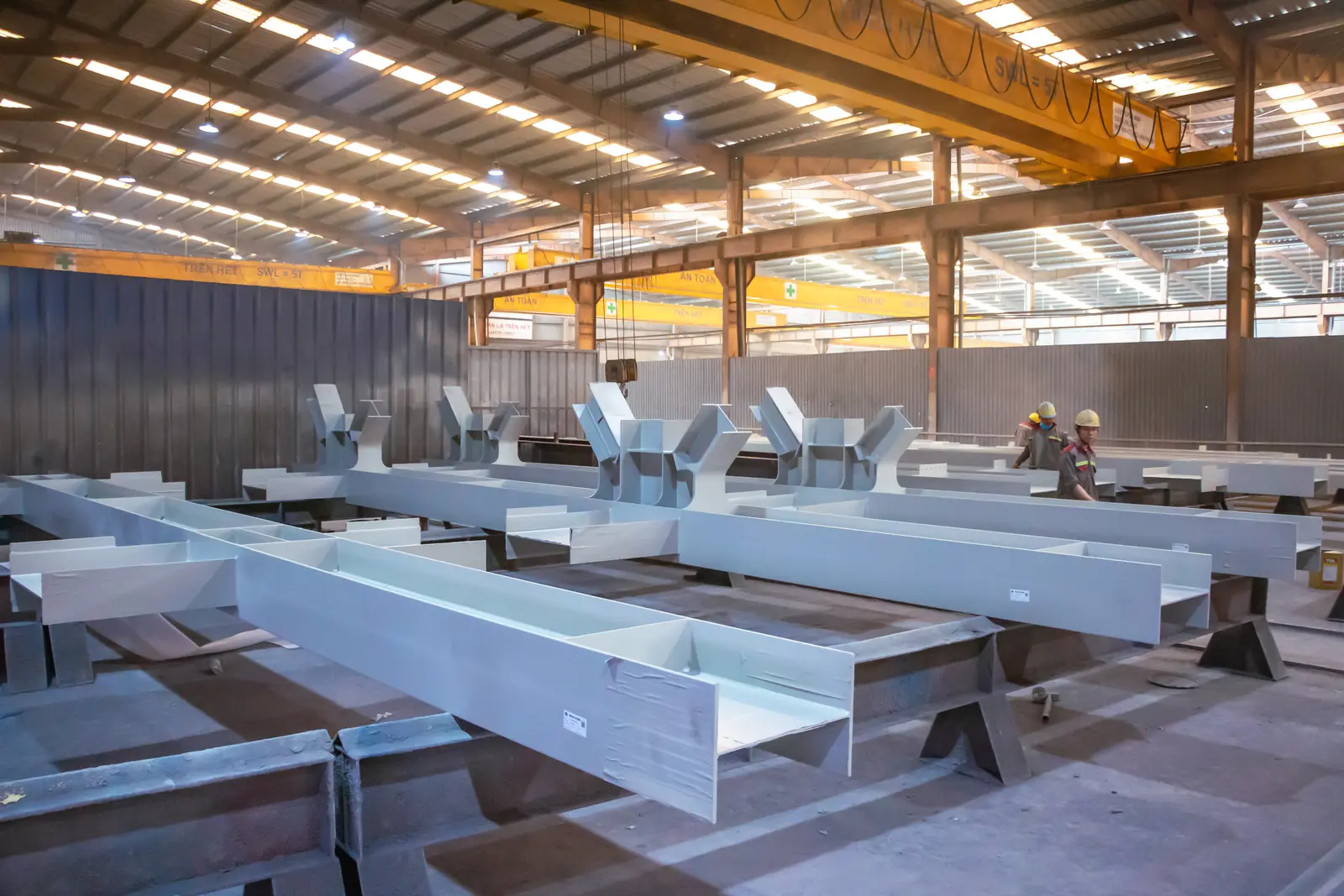 Painted members after DFT inspection
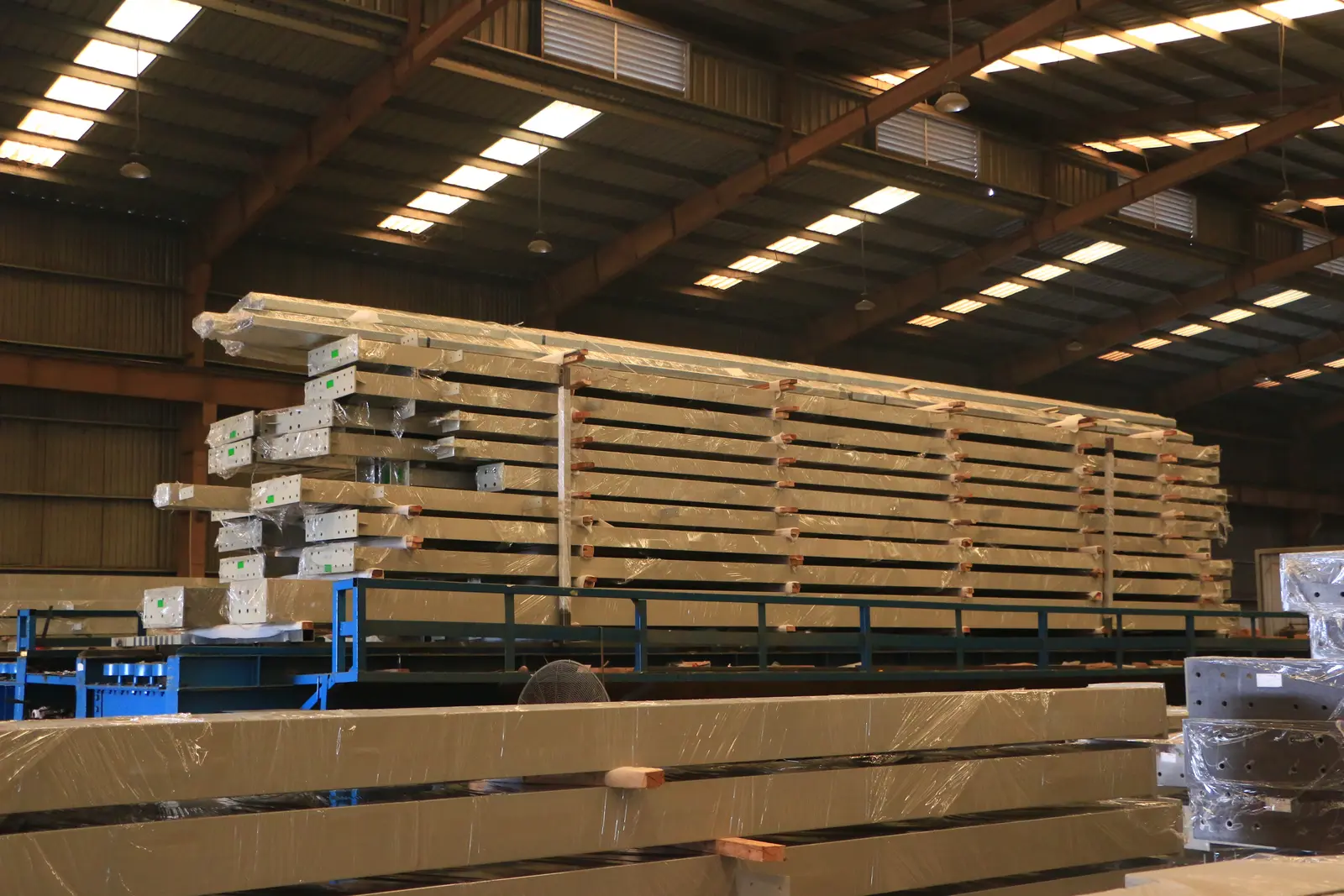 Timber-packed bundles ready for loading
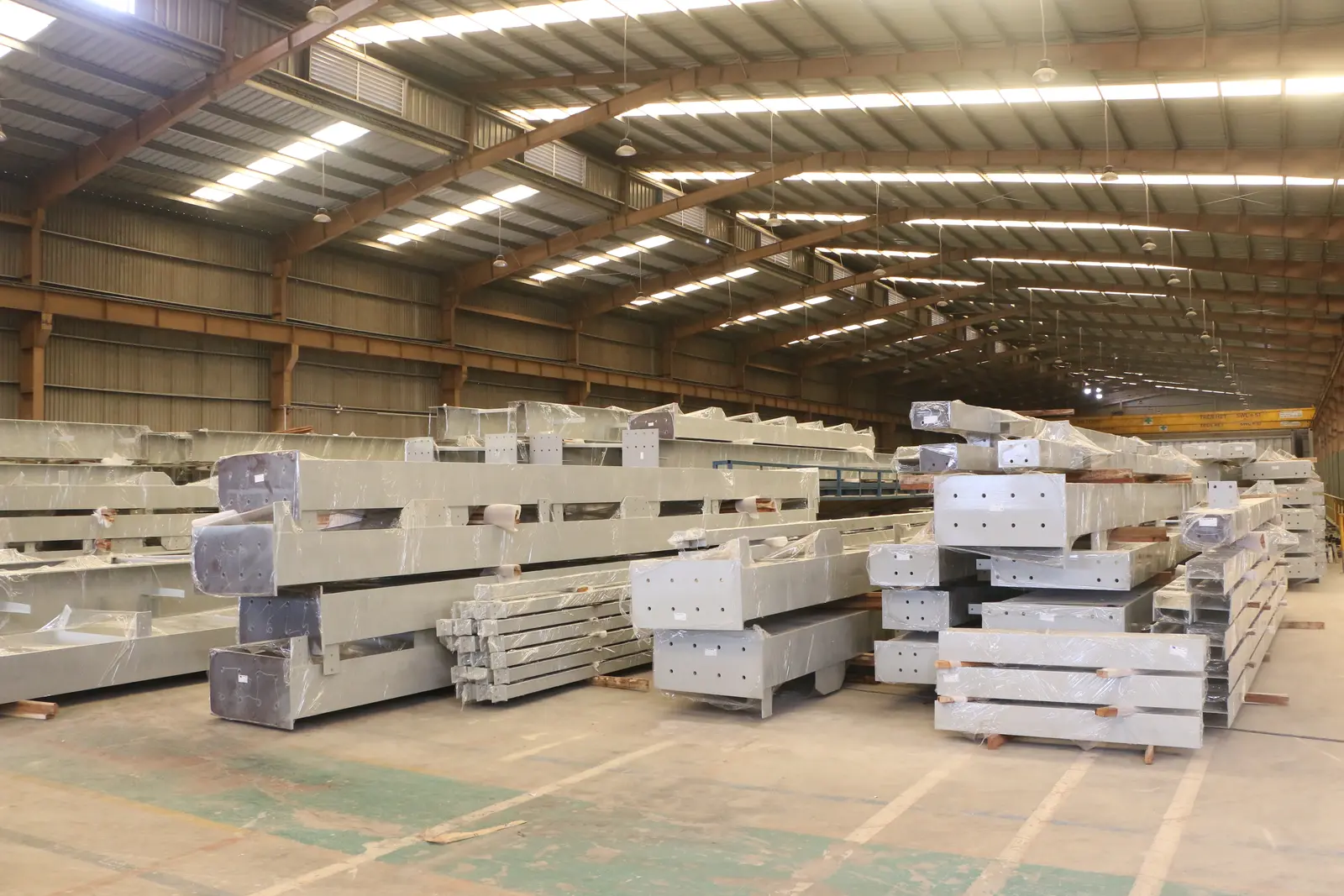 Finished members stored by shipment
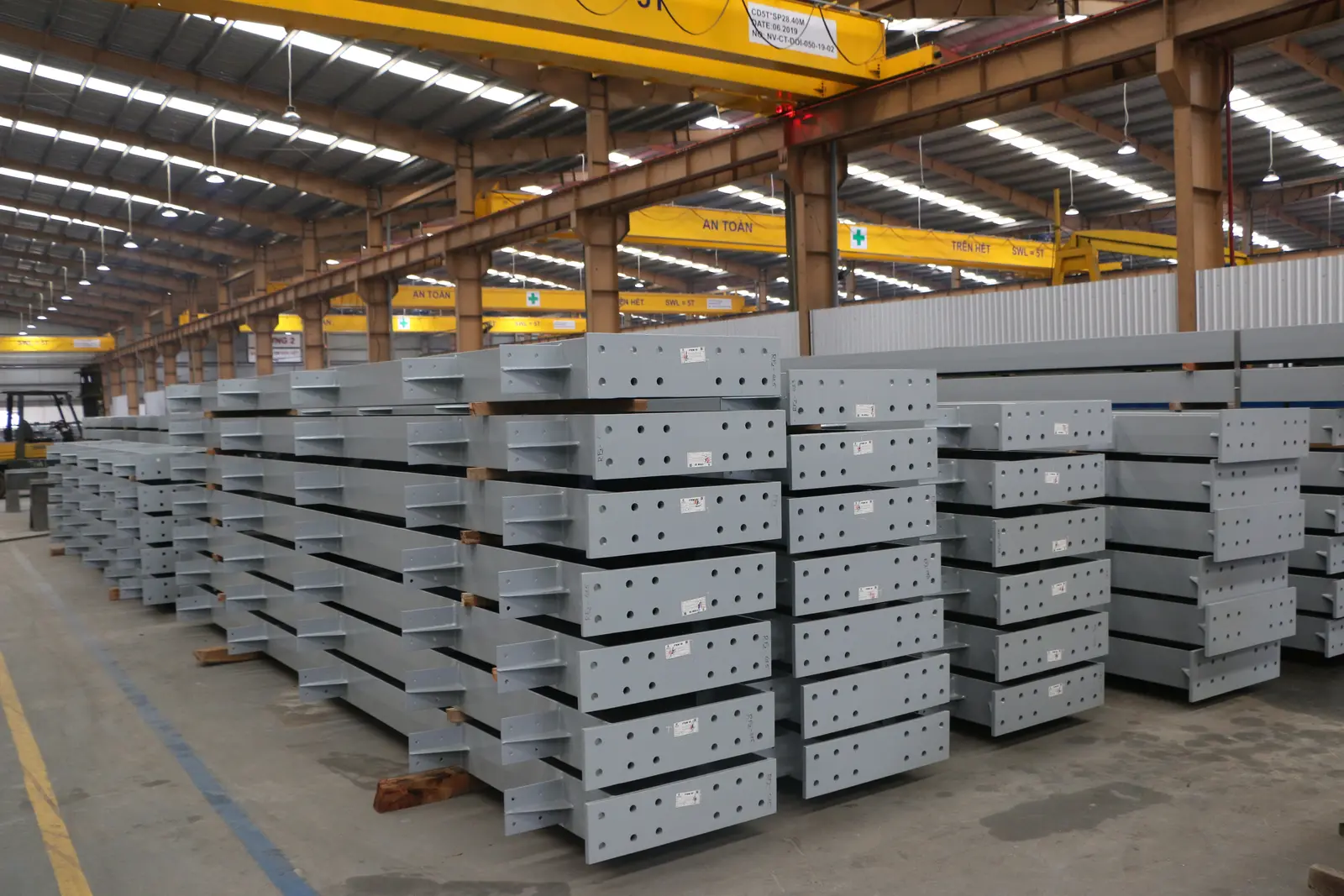 Dispatch area with packed export bundles
FAQ
Our factory fabricates 2,500 T a month. A 100 T project takes about 3–4 weeks from the release of approved shop drawings; larger projects are fabricated and shipped in lots that follow your erection sequence.
Yes. You can visit the factory, appoint a third-party inspector, or join a live video audit with our QC team at any hold point in the ITP.
Welding follows written WPS and PQR, with welders qualified to AWS D1.1. The factory is certified to ISO 3834-2, EN 1090 EXC3 and AS/NZS 5131 CC3, and inspected under IAS AC472.
Every weld is visually inspected by QC. Ultrasonic (UT) and magnetic particle (MT) testing are carried out to the scope set in the project ITP or your specification, and the reports go into your QC dossier.
Yes. We apply TOA, Jotun, Nippon or the brand in your specification, over a blast-cleaned surface, and record the dry film thickness of every coat.
Members are packed on timber with foam under every strap, kept apart so steel never touches steel, loaded on skids screwed to the container floor, and checked and signed by QC before the container is sealed.
Send us your drawings or building size. We reply with a design, steel weight and a CIF or DDP price for Thailand.