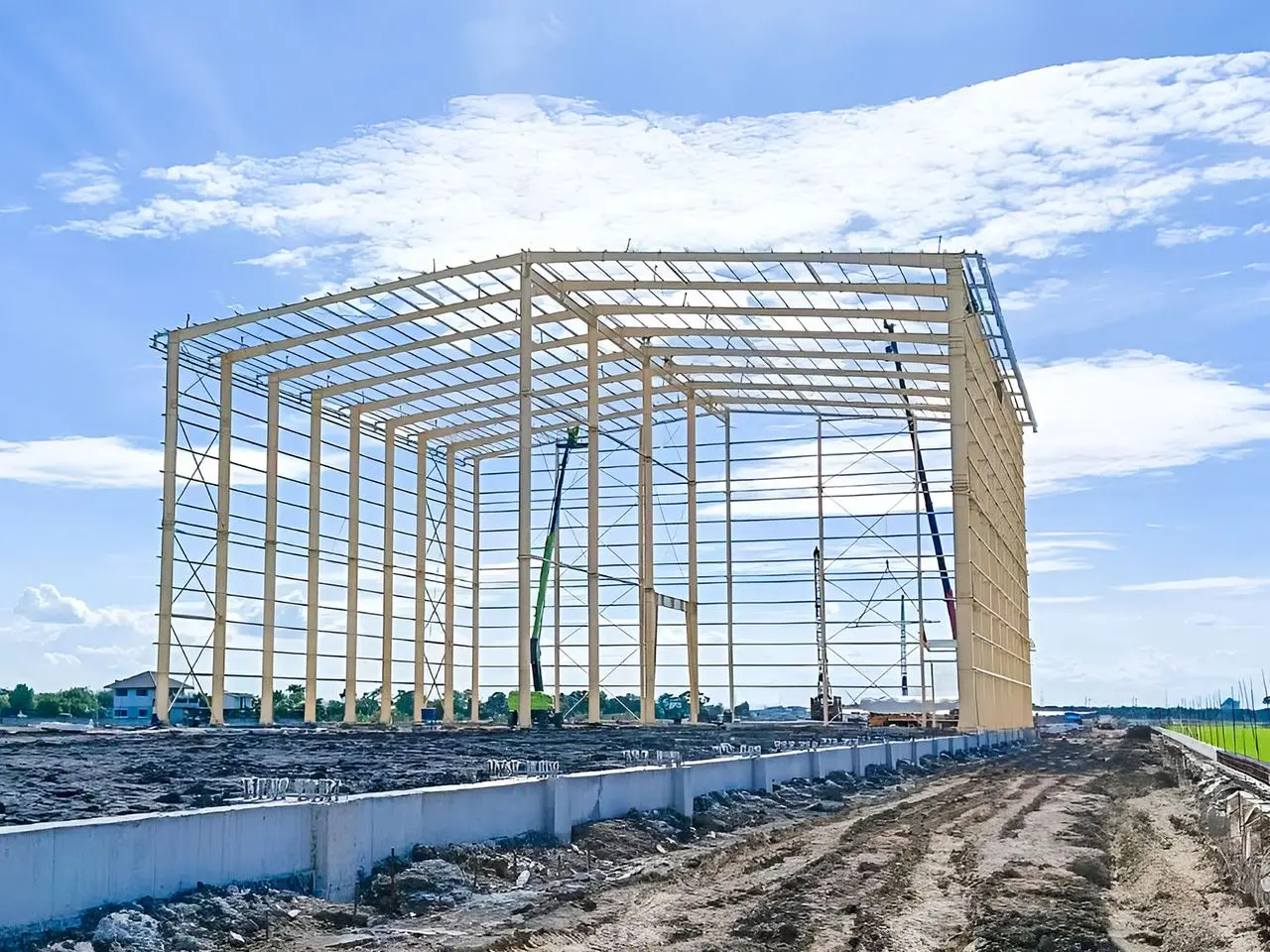
Purlins are the cold-formed steel members that span between the main frames and carry the roof sheets; girts do the same job on the walls. They are light individually, but on a large warehouse they add up to many tonnes – so the choice between C and Z sections matters.
C-purlins
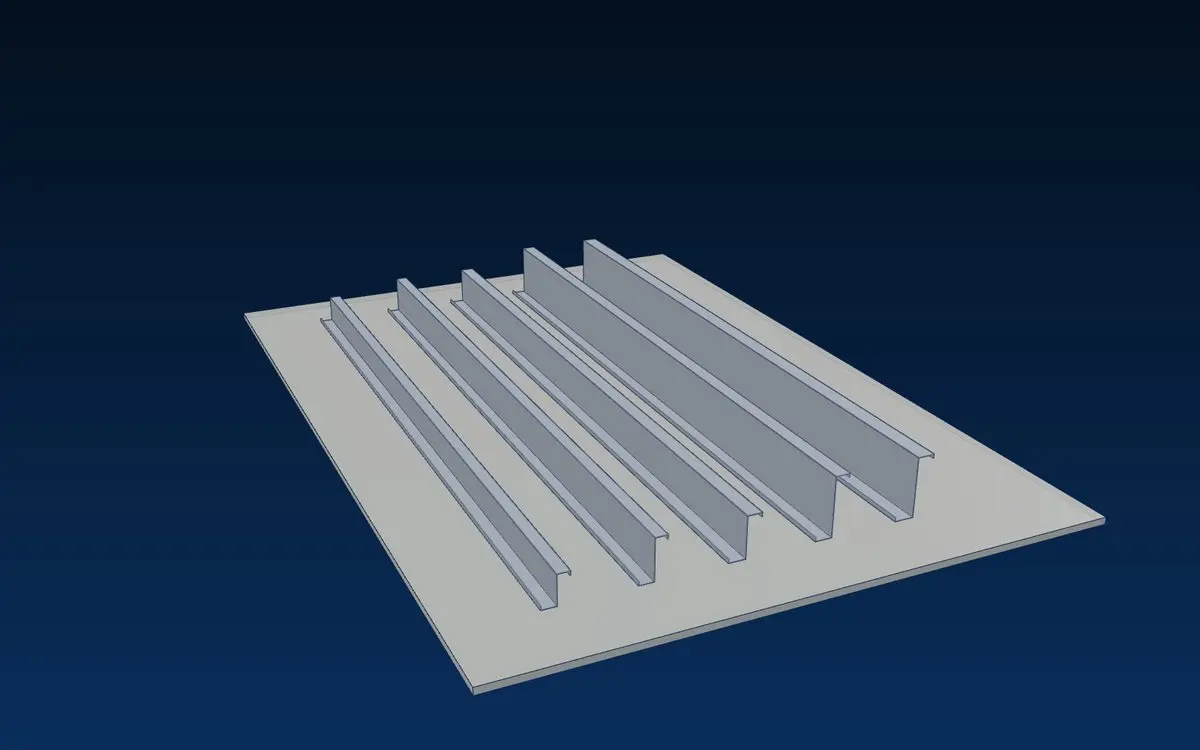
A C (channel) section is symmetrical and easy to connect. It works well over a single span, around doors and windows, as wall girts and in light trusses. Because C sections cannot nest inside each other, they are normally used as simple spans.
Z-purlins
A Z section has flanges of slightly different widths, so two purlins can overlap – or lap – over a frame. The lapped zone is stiffer and stronger, turning a row of purlins into a continuous beam. On roofs with several bays, that continuity allows a lighter gauge or a wider bay spacing.
Spacing and the roof sheet
Purlin spacing should come from the load tables of the actual roof sheet you will buy in Thailand, together with the wind zone of the site. Spacing purlins too widely risks sheet failure; too closely wastes steel.
Bracing and sag rods
Purlins are slender and need lateral restraint from sag rods or bridging, especially under wind uplift. These small parts are essential and should be designed, not improvised.
Corrosion protection
Galvanised high-tensile strip with a zinc coating suitable for the environment – heavier coatings near the sea or in livestock buildings – gives long service life in Thailand’s humid climate.
World Steel designs purlins and girts together with the main frame and delivers them cut, punched and bundled by zone. Purlin-only orders are welcome.
Send us your drawings – receive a priced steel package for Thailand
Structural design, fabrication, fire protection and CIF or DDP delivery in one quotation. Answer within 48 hours.
Get a quotation