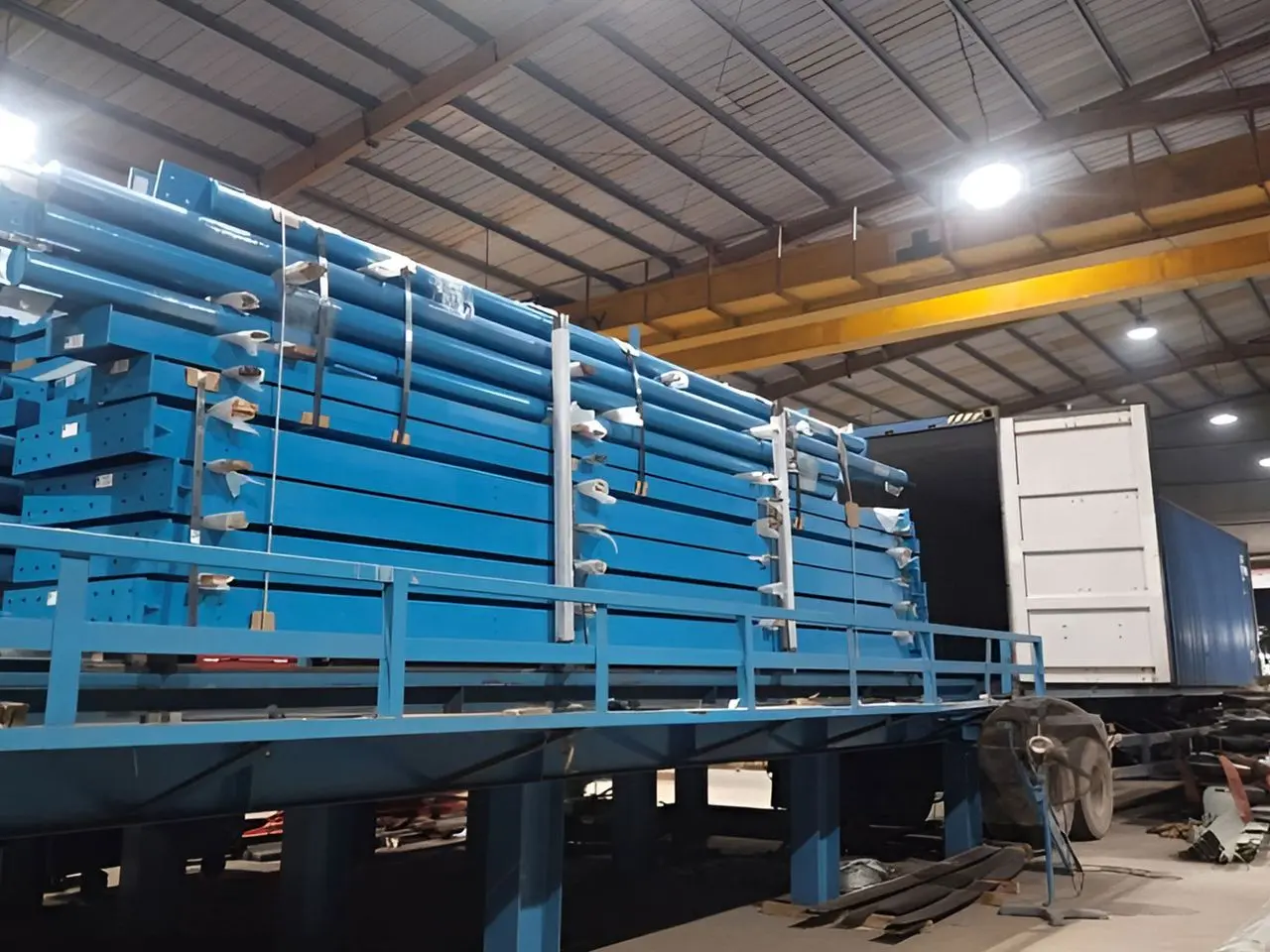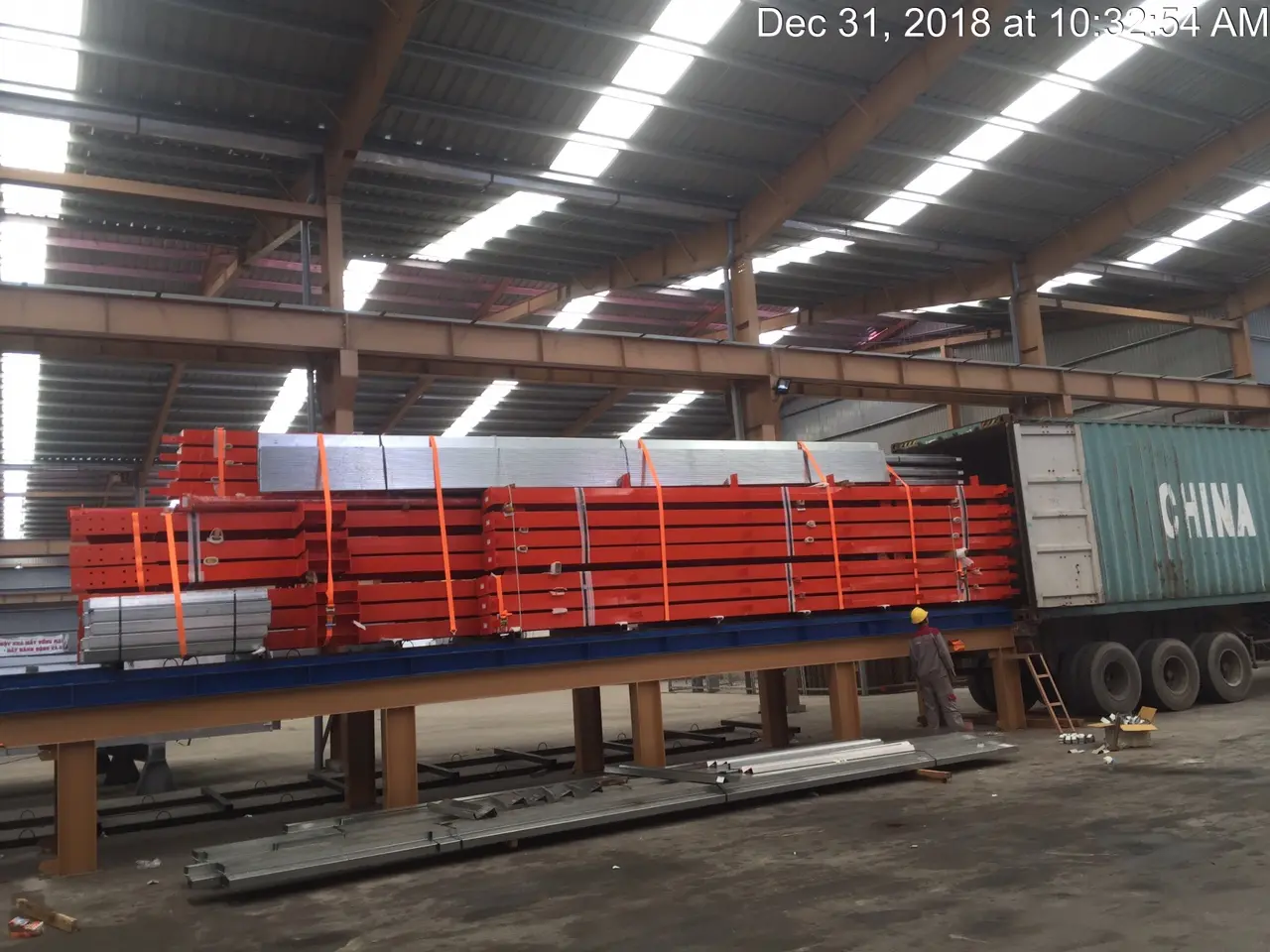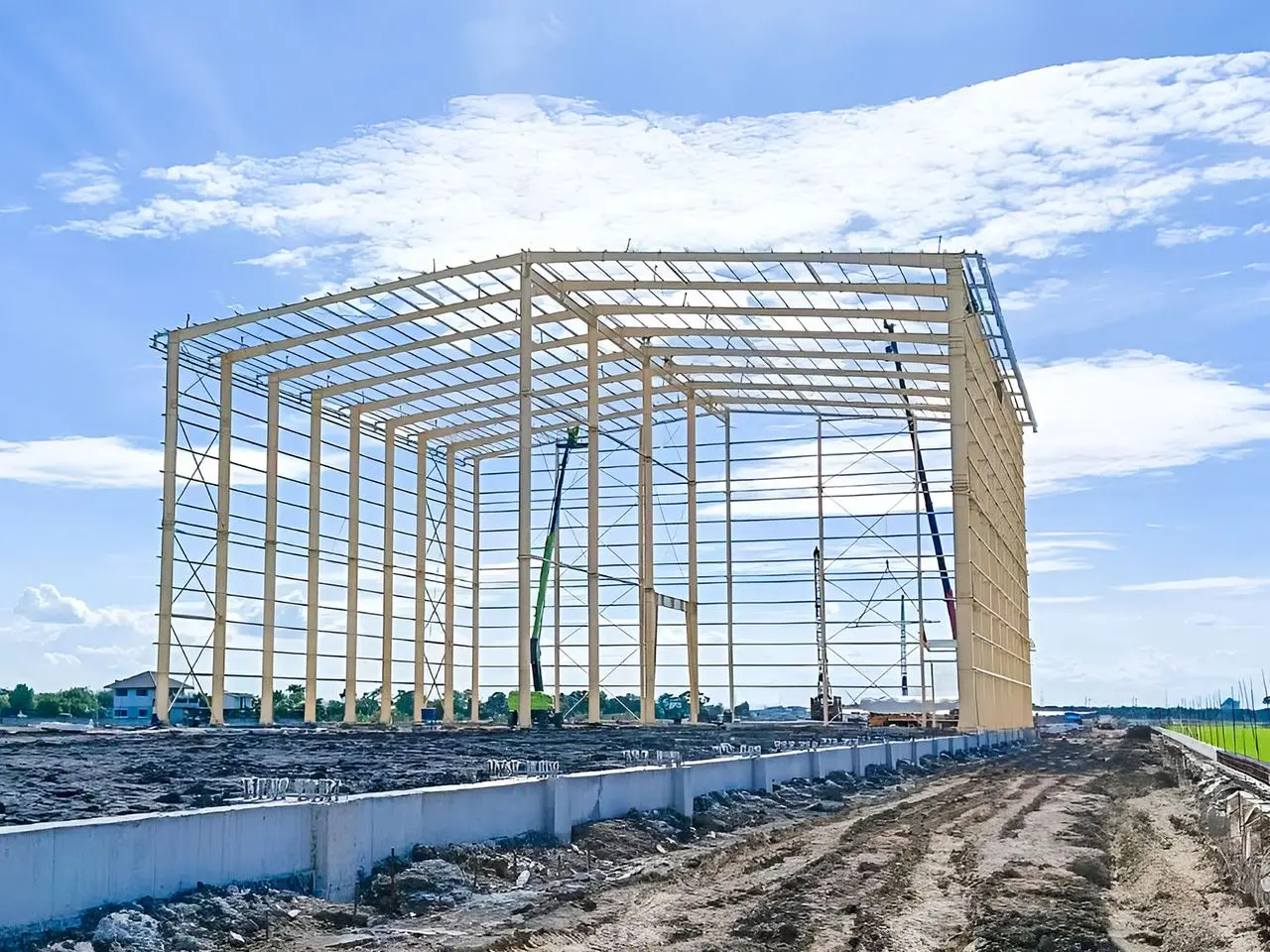
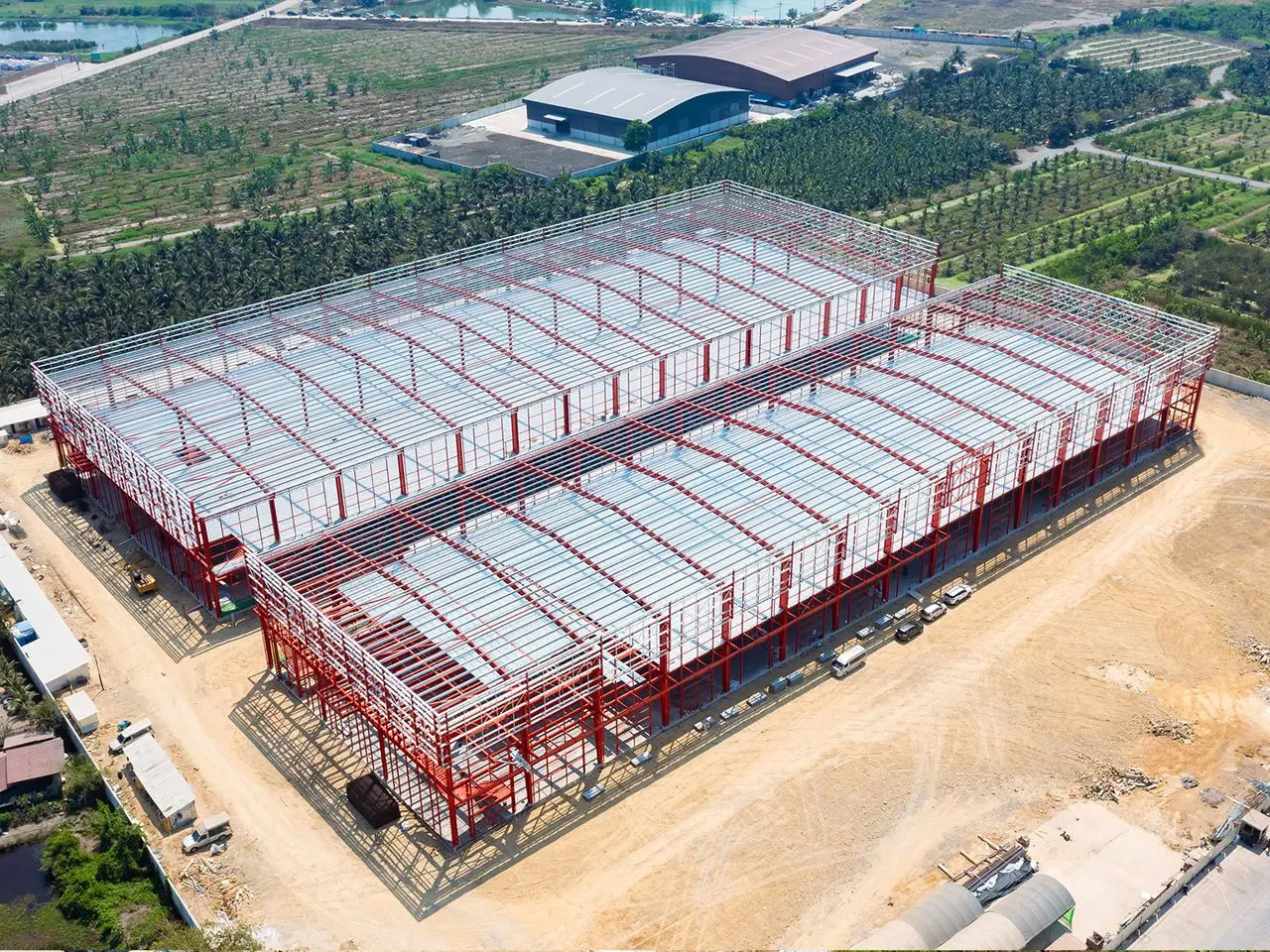
A warehouse in Thailand has to cope with strong monsoon storms, intense rainfall, heat and humidity. Getting the climate right at design stage costs little and avoids expensive problems later.
Wind
Wind loads are determined by the site location and exposure. Thailand’s DPT standard 1311-50 maps basic wind speeds by province, with higher values in parts of the South and along exposed coasts. We design to ASCE 7 and check against the DPT values for your province, paying special attention to roof uplift at edges and corners and to large door openings.
Rain
Tropical downpours can overwhelm undersized gutters. Roof slope, gutter size, downpipe spacing and overflow details should be designed for local rainfall intensity. We detail eaves and valleys so the steel supports the drainage your roofing contractor installs.
Heat and ventilation
Ridge ventilators, louvres and insulated roofs keep internal temperatures down. Structurally this means openings in walls and roof that the frame must frame around – plan them early.
Solar-ready roofs
Rooftop solar is increasingly common on Thai warehouses. Adding the panel dead load and wind effects to the original design is inexpensive; strengthening an existing roof is not.
Corrosion
Humidity, coastal salt and some stored goods (fertiliser, chemicals, livestock) attack steel. Choose the surface protection – paint system or hot-dip galvanising – to suit the environment and the design life.
Tell us the province, size and use of your warehouse; we will propose a frame that suits the Thai climate and your budget.
Send us your drawings – receive a priced steel package for Thailand
Structural design, fabrication, fire protection and CIF or DDP delivery in one quotation. Answer within 48 hours.
Get a quotation